Scaling investments in key African food corridors (2025-2026)


ECDPM is working with the African Union Development Agency (AUDA-NEPAD) to boost investments on food security and climate resilience along key infrastructure corridors in Africa.
Updated in October 2026
This page is also available in French and Portuguese.

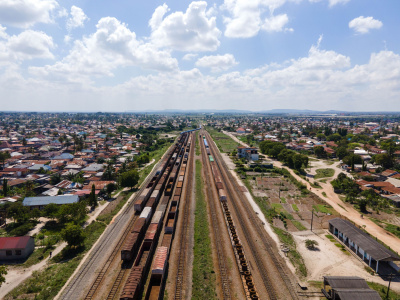
With financial support from the Italian government, we are working to improve the link between the food, trade, infrastructure and climate agendas by identifying cross-border agri-food investment opportunities in three strategic corridors in Africa: the Northern Corridor, the Lobito Corridor and the Abidjan–Lagos Corridor.

Explore our work
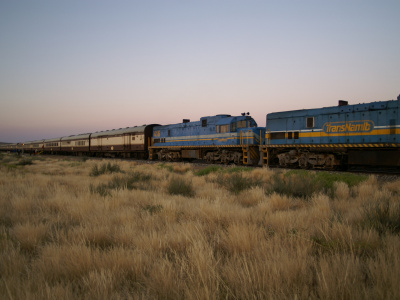
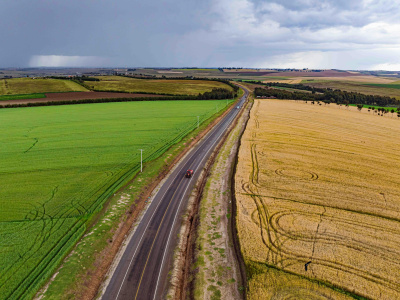
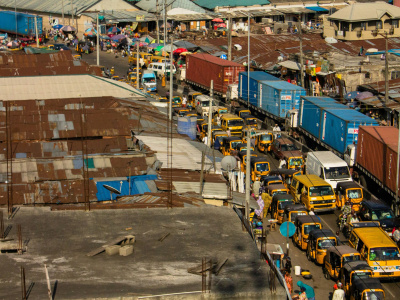

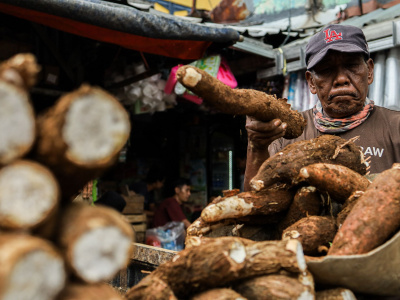
The work has progressed from identifying opportunities to developing a pipeline with named commercial actors, locations of the investments and options for concrete co-financing
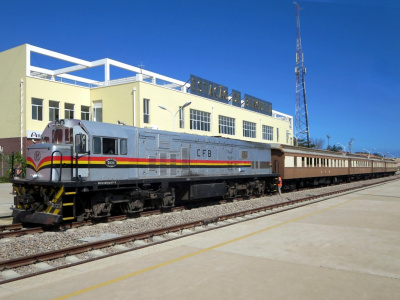
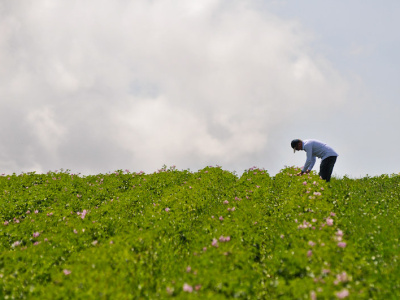
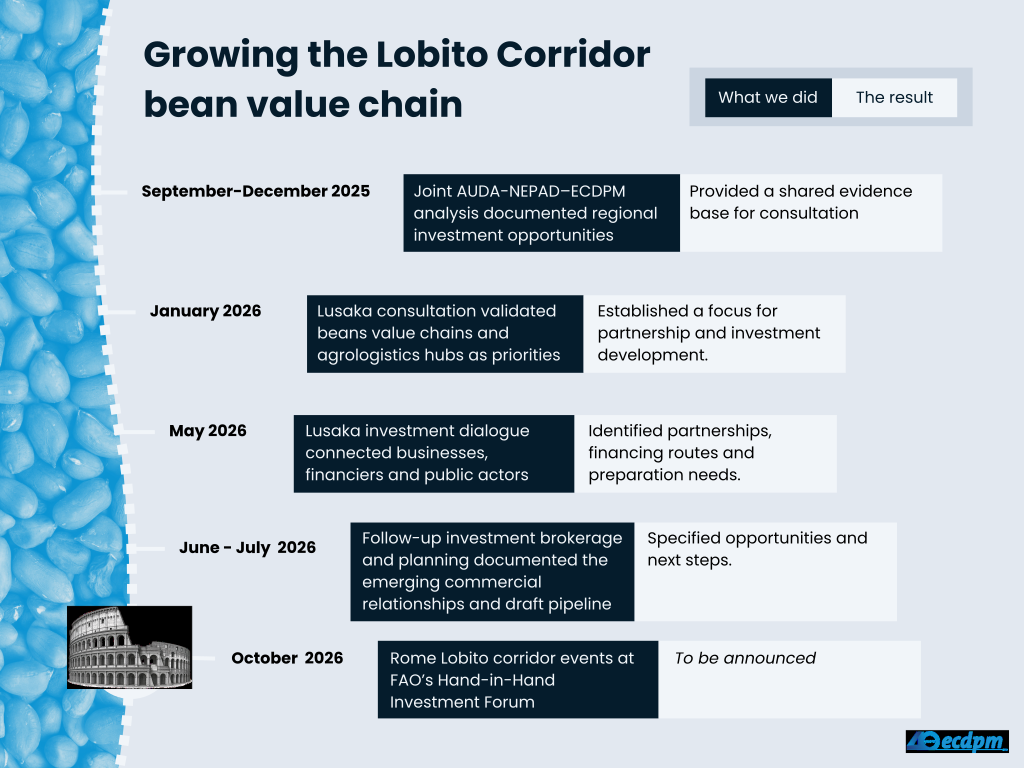
ImpactTurning the Lobito Corridor into a food corridorConnecting Angola, Zambia and the Democratic Republic of Congo (DRC), the Lobito Corridor has attracted more than €2 billion in Team Europe investment, with transport infrastructure and critical mineral value chains at the heart of the initiative. But this infrastructure also holds significant potential to open new markets for farmers and food businesses in a region facing major food and climate pressures: 26.5 million people in the DRC face acute food insecurity, while in Zambia 35% of people are unable to meet their minimum calorie requirements and the country is recovering from its worst drought on record. Building on these infrastructure investments, developing the region’s food economy requires bringing producers, buyers, technology providers, financiers and public authorities together around commercially viable opportunities that can also improve nutrition outcomes and climate resilience. Building a regional beans value chainAt our January 2026 consultation in Lusaka, government representatives from Angola, Zambia and the DRC, alongside private-sector leaders, financial institutions and development partners, validated two linked priorities: regional beans value chains and a network of agrologistics hubs. Beans offer opportunities to connect Zambia’s production and seed expertise with demand in Angola and the DRC. Hubs would provide the aggregation, storage and logistics services needed to make these and other food trades viable. In May, we brought businesses, financiers and public actors together to identify potential partnerships, financing options and practical next steps. This event developed a regional “hub-and-spoke” approach to actual investment pipelines: shared logistics infrastructure, digital services and trade rules would connect opportunities in production, processing and cross-border trade. ECDPM’s subsequent facilitation has included discussions between technology providers and development financiers about how these opportunities could be supported and implemented. The work has progressed from identifying opportunities to developing a pipeline with named commercial actors, locations of the investments and options for concrete co-financing by both public and private financiers. The beans value chain shows what this means in practice. We supported an emerging commercial relationship between Zambia’s Good Nature Agro (GNA) and Angola’s Carrinho, covering potential seed supply and trade in beans. Both, together with others like Mamastops, expressed interest in using the proposed logistics hubs (including in the Ikelenge District and at the Jimbe border post with Angola) to aggregate and store produce for food trade along Lobito. Also, thanks to our dialogues, GNA expressed interest in establishing a bean packaging factory in Zambia. Tetra Pak has indicated potential support through technology, equipment and related expertise, working with local companies responsible for owning and financing facilities. Financing discussions are becoming more specific. Equity Bank has expressed interest in brokering more formal beans trade from Zambia into the DRC, while Italy’s development finance institution, Cassa Depositi e Prestiti, is considering how to invest and through which financing instruments. What comes next?The next opportunity to advance these connections takes place during the World Food Forum in Rome, at the 14 October Special Event on Lobito Corridor. Building on the AUDA-NEPAD corridor work and ECDPM’s wider cooperation with FAO, the meeting will bring governments, businesses, financiers and development partners together to advance the investment opportunities identified so far. |
Project aims
-
Map relevant policies, investment plans and key stakeholders across the corridor, and provide tailored recommendations to strengthen policy and investment coherence.
-
Facilitate dialogue between policymakers, financiers and businesses to unlock funding (including blended finance) for sustainable food, climate and trade initiatives, along with bankable projects.
Why this matters
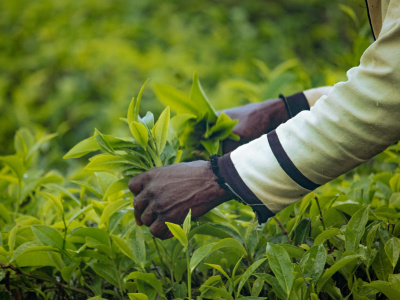
Along the three selected corridors, the initiative also focuses on agrologistics investments that can enhance food security, reduce post-harvest losses, and boost regional trade in nutritious, climate-resilient products.
African trade corridors can serve as powerful catalysts for investment that advances agricultural modernisation, food security, and climate resilience — provided there is:
-
A shift from siloed approaches to integrated, cross-sectoral policymaking and investment planning;
-
Blended-finance instruments and coordinated funding streams targeted at food–climate value chains;
-
Inclusive multi-stakeholder platforms to ensure coherence, ownership, and accountability;
-
Corridor authorities with explicit mandates on food and climate, and effective implementation mechanisms