
Inside the EU’s long-term budget: The multiannual financial framework explained


The multiannual financial framework (MFF) is the EU’s long-term budget, shaping its priorities at home and its influence abroad over a seven-year period. While the current €1.2 trillion framework runs until 2027, discussions are underway for the 2028-2034 MFF.
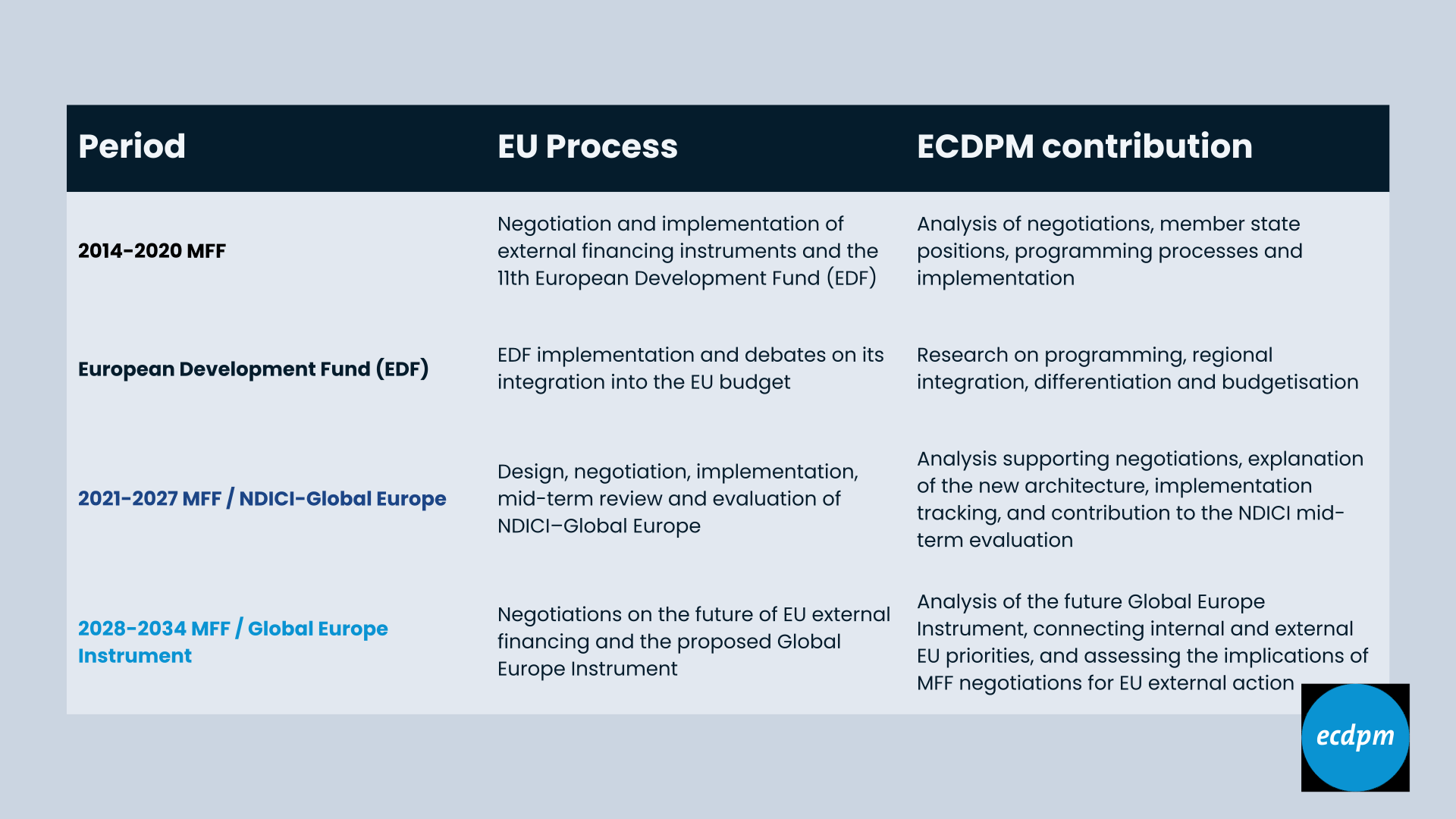
EU external action is increasingly central to the MFF. Once a vulnerable budget line, it is now a test of whether the EU can act as a credible geopolitical and development actor on a tense global stage. ECDPM has accompanied this evolution: from explaining and analysing the EU’s external budget and serving as an embedded evaluator of the external financing instruments, to contributing evidence and analysis to the design of the EU’s external action toolbox and new Global Europe instrument.
This dossier presents our work on the multiannual financial framework and its implications for Europe’s partners. It brings together our latest work on the 2028-2034 MFF, highlights our impact and offers insights into the current and past frameworks.
Last updated August 2026
Frequently asked questions about the MFF
The Multiannual Financial Framework is the European Union's long-term budget. It sets the maximum annual amounts the EU can spend across different policy areas over a seven-year period. The next period spans 2028-2034.
The MFF is not only a budget, but a strategic tool that determines how much the EU invests in development, humanitarian aid, enlargement and partnerships with countries in Africa and beyond.
Decisions taken during MFF negotiations shape the EU’s credibility as a global actor through the funding made available to partners, the conditions attached to that support, its ability to respond to crises and how it competes and cooperates with other powers.
The MFF sets multi-year limits on how much the EU can spend each year, in total as well as under broad policy areas known as ‘budget headings’. Each heading covers a cluster of programmes – for example, single market and innovation, cohesion policy, migration and border management, or external action – and has its own annual limit on commitments and payments.
The current MFF also includes special instruments and flexibility mechanisms that allow the EU to react to crises and unforeseen events beyond the spending ceilings, such as the Flexibility Instrument or the Solidarity and Emergency Aid Reserve. These arrangements are set out in the MFF Regulation, which establishes the EU’s multiannual budgetary framework and provides the basis for the annual budget process.
Under the current 2021-2027 MFF, most EU external action and development cooperation is funded under heading 6, called ‘neighbourhood and the world’. This heading brings together the EU’s main external financing instruments and sets a multi-year ceiling for spending beyond its borders, including on development cooperation, neighbourhood policy, humanitarian assistance and external action priorities.
The largest instrument under heading 6is the Neighbourhood, Development and International Cooperation Instrument – Global Europe (NDICI–Global Europe). It brings together most EU external financing tools, including funding previously provided through the European Development Fund, and combines geographic, thematic and rapid-response programmes. Through these mechanisms, the EU supports partnerships with neighbouring countries, with Africa and other regions, addresses global challenges such as climate change and migration, and responds to crises.
For the 2028-2034 MFF, the European Commission has proposed a successor: the Global Europe instrument. Negotiations are currently underway between the EU institutions on its structure, governance, priorities and budget.
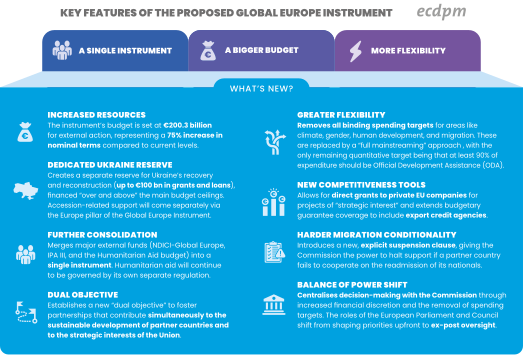
The Global Europe instrument consolidates existing instruments into a single, more flexible architecture, with a greater focus on EU geopolitical and economic interests. It includes new support for European competitiveness and a hardening of migration conditionality. The proposal aims for greater EU agility, notably by removing many binding spending targets, increasing non-programmable funding and expanding the financial toolbox. But these changes raise significant concerns about predictability, oversight, the dilution of specific mandates and the politicisation of humanitarian aid.
The European Commission launches the process by proposing a detailed regulation for the next MFF, including the overall size of the budget, the structure of headings and special instruments and indicative allocations for major programmes. On this basis, EU member states in the Council negotiate the package, which they must ultimately adopt unanimously. The European Parliament must give its consent to the MFF as a whole and co-legislates on key elements of sectoral programmes that implement it.
Following the Commission’s proposal in July 2025, negotiations are now underway between the EU institutions and member states on the size, structure and priorities of the 2028-2034 MFF. These negotiations are taking place against the backdrop of major political debates on the repayment of NextGenerationEU debt, continued support for Ukraine, climate and industrial policy objectives, and the EU’s role in an increasingly contested geopolitical environment.
ECDPM has worked on several successive multiannual financial frameworks, combining analysis of EU budget proposals with close tracking of negotiations and implementation, including in partner countries. Our role has grown over time: for instance, ECDPM was the only think tank involved in the midterm evaluation of NDICI-Global Europe.
Our work focuses in particular on how the MFF shapes the EU’s external action – including development cooperation, neighbourhood policy, climate and human development, and partnerships with Africa and the wider world.
Get in touch
Would you like to know about our work on the EU’s long-term budget, engage our expertise or share your thoughts? Get in touch with Alexei Jones, Mariella Di Ciommo or Andrew Sherriff. For media enquiries, please contact Isabell Wutz or Virginia Mucchi.





ECDPM impact on the MFF negotiations
The Polish Presidency of the Council of the EU formally invited ECDPM to brief the Ad Hoc Working Group on the MFF (Global Europe Instrument) on 2 March 2026. 'The Presidency considers that it is in the interest of the Council to be able to benefit from the expertise of these third parties.'
Alexei Jones has been quoted in Devex and interviewed by Euronews on what the current MFF negotiations mean for sustainable development.
ECDPM was the only think tank involved in the mid-term evaluation of NDICI-Global Europe, with findings are already written into EU Council conclusions and EU Commission documents.
In 2023, Alexei Jones appeared as a panellist in Panel 1 on Governance and scrutiny of Global Europe, in a European Parliament Public Hearing that directly fed into Parliament’s mid-term evaluation recommendations.
Table of contents
- Negotiations on the 2028-2034 MFF
- Implementation of the 2021-2027 MFF
- Negotiations on the 2021-2027 MFF
- Implementation of the European Development Fund
- Negotiations on the 2014-2020 MFF
Negotiations on the 2028-2034 MFF
Discussions on the next multiannual financial framework are underway. Through a series of analysis and events, we aim to inform this process and shed light on the complexities of the negotiations.
'Connecting the dots' initiative
At ECDPM, we have consistently argued that external action is not an add-on but a strategic necessity. Europe cannot afford to treat its internal and external priorities separately. That's why in October 2025, we launched a new initiative.
|
Through our ‘Connecting the dots’ initiative, we aim to bridge the communities that shape the MFF – spanning competitiveness, defence and international partnerships. Starting this autumn, we will bring together policymakers, practitioners and experts in closed-door and public dialogues to explore how Europe can better align its internal priorities with its global ambitions. By fostering dialogue across policy communities, we hope to support a more integrated and strategic EU budget. We also invite policymakers, experts and partners interested in these themes to share feedback and join us in this effort to connect the dots. If you would like to know more, share insights or partner with us, please get in touch with Alexei Jones or Mariella Di Ciommo. |
 |
Key analysis and relevant articles






ECDPM in external EU budget debates
EU budget overhaul fuels debate over the future of development cooperation
Devex quoted Alexei Jones who discusses the European Commission’s proposed overhaul of the EU’s long-term budget (24 July 2026)
Inside the EU plan to remake development aid for a competitive era
Devex quoted ECDPM experts which warn that flexibility could come at the expense of accountability (22 July 2026)
Not only how much, but how
Alexei Jones argues that General Affairs Council discussions on the MFF have made one thing clear: the debate is no longer just about size and priorities, but about who steers the budget and how (18 March 2026)
Il principale donor al mondo? Il ruolo del prossimo budget europeo per lo sviluppo sostenibile
In this podcast from the Institute of International Affairs (IAI), Mariella Di Ciommo speaks about the opportunities and challenges that the upcoming EU budget highlights for development cooperation (23 December 2025)
External financing in the next EU budget: Bold ambition or an announced retreat?
Mariella Di Ciommo has contributed a chapter to the latest edition of TEPSA's 'European Council Experts’ Debrief' titled 'Towards the next MFF: Can the EU deliver?' (14 October 2025)
Backing Ukraine above the 2028-2034 MFF ceiling poses political rather than financial risks
This article from The New Union Post is based on interviews with Amandine Sabourin and Mariella Di Ciommo (8 September 2025)
Migration in the new EU external instrument: Continuity, leverage and conditionality
Anna Knoll provides a preliminary assessment of how the external dimension of migration is covered in the Global Europe instrument proposal (21 July 2025)
Is von der Leyen ready for bruising budget battles?
Alexei Jones appears in the latest 'Brussels, my love?' episode by Euronews to discuss MFF politics and the misstep of cuts for external action (19 July 2025)
Domestic and international priorities in the EU’s next long-term budget
ECDPM director San Bilal highlights key points from the European Commission's MFF proposal that deserve attention (17 July 2025)
EU seeks major boost to development in budget amid ‘Europe First’ shift
Alexei Jones is quoted by Devex (17 July 2025)
An increased future EU budget for international cooperation - some first quick thoughts
Andrew Sherriff shares his first thoughts on the European Commission's proposal for the next MFF and an increased budget for international cooperation (17 July 2025)
The smartest move: Why the EU must invest in every child, everywhere
For Save the Children, Katja van der Meer examined the political and funding challenges in prioritising children’s rights in EU external action (9 July 2025)
EU Open Public Consultation on the EU’s next long-term budget (MFF)
ECDPM provided input into the EU's open publication on the MFF (5 May 2025)
European Citizens' panel
Alexei Jones was appointed as an expert in the knowledge committee advising and shaping discussions for the European Citizens' Panel on the new MFF (March-May 2025)
Health is closely linked to both the EU’s external and internal interests
For Global Health Advocates, Katja van der Meer examined the MFF in relation to health (5 February 2025)
Infographics
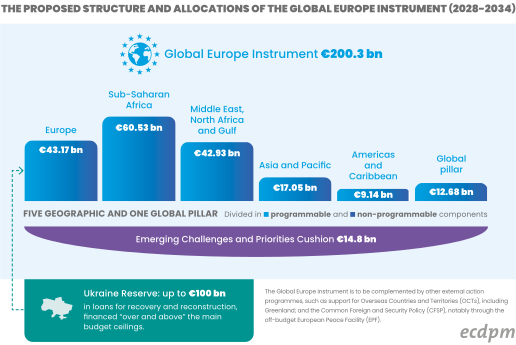
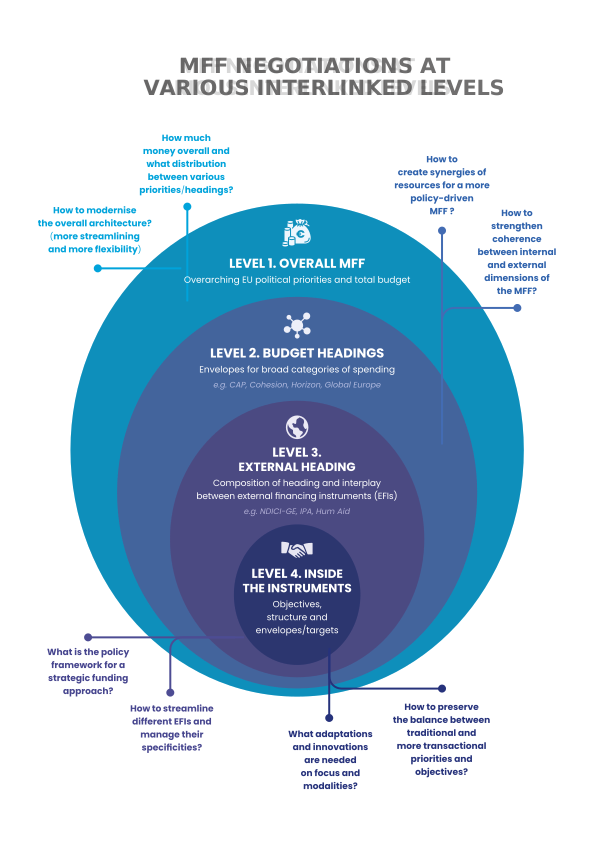
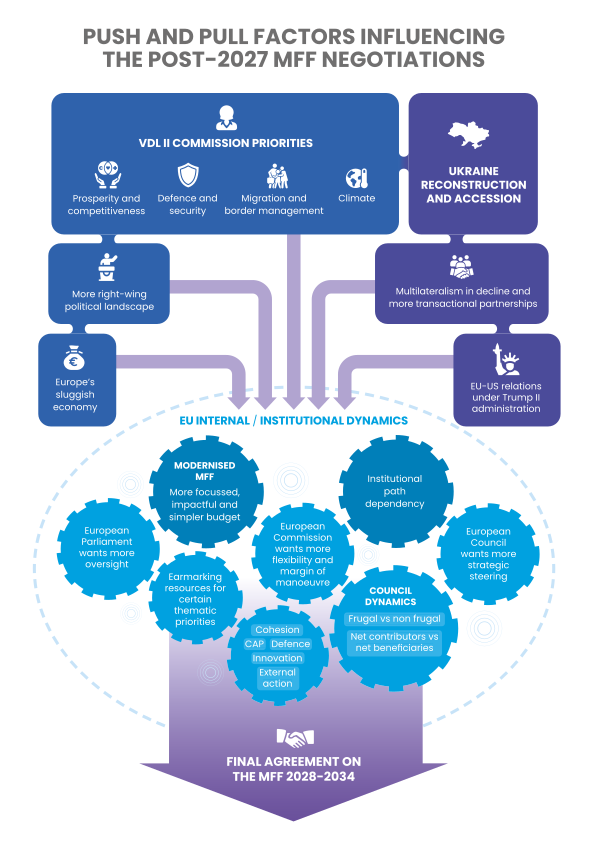
Implementation of the 2021-2027 MFF
The current MFF is structured around specific headings, including Heading 6 – Neighbourhood and the World. Within these headings, funds are allocated through various instruments. Under heading 6, the largest instrument is the Neighbourhood, Development and International Cooperation Instrument – Global Europe (NDICI-Global Europe). Over the past few years, we analysed how NDICI-Global Europe has been implemented.







Negotiations on the 2021-2027 MFF
Starting in 2018, we conducted extensive analysis on various aspects of the negotiation process for the 2021-2027 multiannual financial framework. Some of this analysis focused on specific geographic or thematic issues, while other work provided a broader, more overarching perspective.





Implementation of the European Development Fund
The European Development Fund (EDF), while not formally part of the MFF, was typically negotiated, planned and implemented alongside it. This multibillion-euro instrument targeted specific African, Caribbean and Pacific countries under the Cotonou Partnership Agreement. The 11th EDF is currently being ‘spent down’ following the decision not to renew it in 2021, with the fund being replaced by NDICI-Global Europe. We examined in detail the implementation of the EDF at the national and regional levels.
