Who will stand up for Global Europe?


The Irish Presidency’s negotiating box foresees a 17% cut for Global Europe. Our experts examine what that would mean for Europe’s external relations and its competitiveness, security and defence. They argue that the EU’s budget should reflect the world Europe operates in, rather than letting established spending patterns determine the limits of its ambitions.
The Irish Presidency’s negotiating box for the EU’s 2028–2034 multiannual financial framework (MFF) brings an old problem into sharp focus: when the pressure to cut the overall budget increases, Europe’s external action risks becoming collateral damage.
The newly proposed €1.8255 trillion budget is an 8% reduction from the Commission’s proposal. But the cuts are far from evenly distributed. Heading 3 on Global Europe faces a reduction of €37.5 billion, or around 17%. Meanwhile, traditional areas of EU spending, particularly agriculture and cohesion, are largely protected with only a 3% cut.
This is not simply a dispute about percentages. It reflects the political dynamics of the MFF negotiations, and raises a broader question: is Europe adapting its budget to a changing world, or allowing established spending patterns and national political priorities to undermine its ambitions?
Old priorities protected, global ambitions exposed
The Irish Presidency is trying to bridge two opposing positions. The so-called ‘Frugals’, six countries that are net contributors to the EU budget, want a smaller overall budget, while the ‘Friends of Cohesion’, mostly net beneficiaries, are determined to protect funding for agriculture and less prosperous regions. Neither camp appears satisfied with the current proposal, and further pressure to cut expenditure remains.
Yet the search for a compromise has consequences. By protecting traditional spending areas while reducing resources for newer priorities, the Irish Presidency’s negotiating box risks reinforcing the very budgetary patterns that the Commission sought to change.
Competitiveness is one example. EU countries increasingly recognise the need to invest in their economic future and strengthen Europe’s position in a more contested global economy. Yet these ambitions face significant pressure in the negotiations, as do defence and external action. Overall, the Irish Presidency’s negotiating box proposes a 13% cut in the budget Heading 2 for Competitiveness, Prosperity and Security.
Likewise, Global Europe is caught between the demands for a smaller budget and the political weight of established spending commitments. With few member states consistently championing external action as a strategic priority in its own right, it risks taking a disproportionate share of the cuts.
This is not to suggest that agriculture, cohesion or other domestic priorities are less important, or that external action should be protected from all budgetary reconciliation needed to agree the final version. The question is whether the trade-offs being made reflect the EU’s stated ambitions and whether the overall settlement will give it the means to pursue them.
At a time when confidence in the direction of global affairs is low, underinvestment in international cooperation will make things worse, not better.
Global Europe is about more than aid
The EU’s ambition to become a strong geopolitical actor needs resources. Yet Global Europe – the EU’s main instrument for external relations – is often treated as a separate spending category, primarily associated with development cooperation and humanitarian assistance, missing much of its strategic significance.
It is also one of the EU’s main instruments for building partnerships in the world. These relationships also matter for Europe’s own economic and security priorities. Competitiveness and economic security depend partly on reliable partners, resilient supply chains, access to markets and resources and the upholding and administering of multilateral rules. The EU’s ability to respond to international crises, sustain relationships and exert influence requires more than declarations of intent: it requires the capacity to engage over time.
This does not mean reducing external action to a calculation of European returns. Development and humanitarian action matter in their own right and their value goes well beyond what they can deliver for European interests. But the case for Global Europe should not be confined to defending aid budgets. It must also be part of the wider discussion about what Europe needs from its external engagement, and the resources required to deliver it. At a time when confidence in the direction of global affairs is low, underinvestment in international cooperation will make things worse, not better.
Europe cannot credibly aspire to greater global influence while shrinking the resources behind it.
The details matter, too
The proposed Irish Presidency’s negotiating box also raises questions about the balance within the Global Europe instrument itself.
The proposed allocations suggest that geographic spending faces smaller percentage reductions than the global pillar and the emerging challenges and priorities cushion. This matters because reducing flexibility affects the EU’s ability to respond to crises, adjust to changing circumstances and address priorities that cannot be fully anticipated at the start of a seven-year budget.
The Commission’s proposal sought greater scope to move resources between different parts of the Global Europe instrument without requiring repeated approval from member states. But the negotiating box reduces the cushion and narrows the financial room for manoeuvre. The final legal text will determine how flexibility is balanced with political oversight, both within the GEI and across the wider MFF.
The €25 billion indicative allocation for humanitarian aid offers some protection for this priority. The return of a 10% migration spending target is politically significant: as the only external action target retained without brackets, it suggests strong consensus among member states on the priority given to migration. Yet it raises questions about how broadly activities addressing migration’s root causes may be interpreted.
These details will shape how Global Europe will work in practice. But they cannot be considered separately from the overall budget settlement. Even a well-designed instrument will struggle to deliver if the resources and flexibility available to it are insufficient.
The October European Council: A key moment
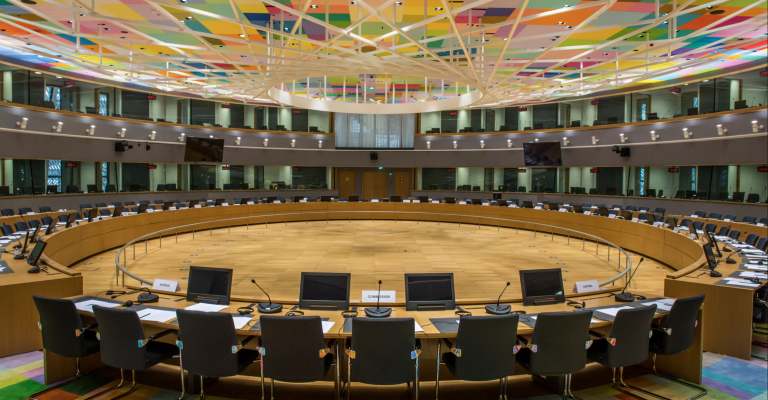
On 15–16 October, EU leaders will discuss the Irish Presidency’s negotiating box, with the aim of consolidating the key elements needed for an MFF agreement by the end of 2026.
The MFF debate at the General Affairs Council on 13 October exposed persistent tensions between member states, with the newly proposed negotiating box failing to satisfy those seeking deeper cuts or those defending traditional spending areas. Notably, few member states spoke out explicitly about the proposed cuts to Heading 3 or made a clear case for protecting Global Europe, leaving it particularly vulnerable in the negotiations.
Leaders need to consider how the proposed trade-offs align with the EU’s ambitions for competitiveness, security and strategic autonomy. Global Europe should be part of that strategic discussion, not simply a source of savings in the search for a compromise. The growing debate over ‘new own resources’ will also be central to the search for a compromise.
Where are the friends of Global Europe?
Those who recognise the strategic importance of international engagement will need to make that case in the Council, the European Parliament and in the wider debate on the EU budget. But this cannot be left to those working on external action alone. The connections with competitiveness, economic security and Europe’s global position need to be made more clearly by those working on these priorities too.
In a budgeting process that is shaped more by lobby groups than strategic foresight, what is missing is a broader constituency of Friends of Global Europe: actors willing to look beyond their own budget headings and explain why external engagement matters to Europe’s wider interests and ambitions.
The challenge is to ensure that the EU’s budget reflects the world Europe is operating in and gives it the resources to pursue its ambitions, rather than allowing the weight of established spending patterns to determine the limits of what it can achieve. As Commissioner Serafin has put it, this is not only a question of ambition, but also of necessity.
The views are those of the authors and not necessarily those of ECDPM.