Operationalising the EU-India partnership


The upcoming EU-India free trade agreement offers a transformative opportunity to build resilience in the face of US and Chinese tech dominance. Gautam Kamath, Chloe Teevan and Alfonso Medinilla argue that to move past bureaucratic hurdles, both sides must focus on shared economic security across priority sectors.
Summary
The upcoming EU-India Free Trade Agreement offers a transformative opportunity to build resilience in the face of US and Chinese tech dominance, but real growth requires operationalising the EU-India Trade and Technology Council (TTC). To move past bureaucratic hurdles, both sides must focus on shared economic security across priority sectors.
Targeted collaboration in strategic value chains: Prioritise high-leverage clusters (or ‘blue valleys’) like semiconductors and green hydrogen and go deep within the value chain to find complementarities – pairing European capital and Research & Development with Indian talent – in ‘low hanging fruit’ areas like clean tech, semiconductors, green ammonia, cybersecurity and critical raw materials.
- Putting in place cross-cutting enablers: Expand research cooperation through Horizon Europe, streamline visa and mobility frameworks for skilled talent, and establish joint financing mechanisms such as the proposed €500 million decarbonisation fund.
- Addressing regulatory friction: Realising this potential requires resolving regulatory friction created by EU industrial policy initiatives, including "Made in Europe" local-sourcing provisions in the Industrial Accelerator Act, stringent compliance under Chips Act 2.0, and CBAM carbon tariffs. Aligning green product standards early will prevent non-tariff trade barriers.
- Building trust through regular exchanges: Deepening defense and security cooperation requires navigating geopolitical sensitivities, particularly regarding Russia and supply chain security. Establishing a permanent bilateral TTC secretariat with active industry and stakeholder involvement will ensure consistent execution, build mutual trust, and sustain long-term strategic alignment.
Introduction
The EU-India free trade agreement, due to be signed in Brussels by the end of the year, could become the basis for a transformational change in how the EU shapes its international partnerships. Bringing together research excellence, engineering skills, and one quarter of the world’s population and global economy, this “mother of all deals” has the potential to shape a new industrial and digital partnership that could one day rival the current G2 world of US and Chinese technological and economic dominance. The Trump Administration’s weaponisation of tariffs (and threats to allies like Denmark and Canada), coupled with Chinese retaliation through export controls on critical raw materials (CRMs), signal a global rewiring of trade practices, highlighting the urgency of new technology partnerships.
But a Free Trade Agreement (FTA) alone is not a guarantee that trade will dramatically increase. While political momentum has never been greater, this could quickly give way to stagnation given expected legal and bureaucratic hurdles. Avoiding this outcome will require considerable efforts to push through “easy wins” in critical value chains and to grapple with prickly regulatory and non-trade barriers.
The EU-India Trade and Technology Council (TTC) is the vehicle with the most potential to make this happen, but only if adapted to fit this new role. The TTC is a bilateral mechanism that currently brings together EU Commissioners and Indian Ministers to discuss trade, green and digital technologies. Several officials involved on both sides that we have spoken to have privately stated there is a clear desire to move beyond photo-ops and “operationalise the TTC”- i.e. to create the conditions for new trade and investments across a clear set of priority sectors. Doing so will require both broadening and deepening the TTC format, and bringing in all the relevant policy and industrial stakeholders.
A deal fit for the future of trade
While tariff reductions cover today’s trade, real partnership and shared prosperity can only be built on ensuring complementarities in critical future industrial value chains, ranging from semiconductors, to energy, clean tech and digital services. This is about more than markets - it is about shared economic security in a world of increasingly fickle hegemons. Europe and other powers have no choice but to work together to mitigate their dependence on the United States and China. Yet, even when trade deals are in place, these do not guarantee outsized growth.
Building resilience is both politically challenging and economically complex. Critical dependencies are felt across all sectors of the economy; from pharmaceuticals and critical raw materials (CRMs) to research, cloud services, telecom equipment and semiconductors. Addressing them calls for a new model of trade, technology development, and industrial investments, one that builds resilience through diversification and creates the conditions to develop alternatives in the face of economic coercion. The EU-India TTC can serve as a proof of concept for a new mode of coordination between the EU and other powers.
Strategic value chains and “blue valleys”
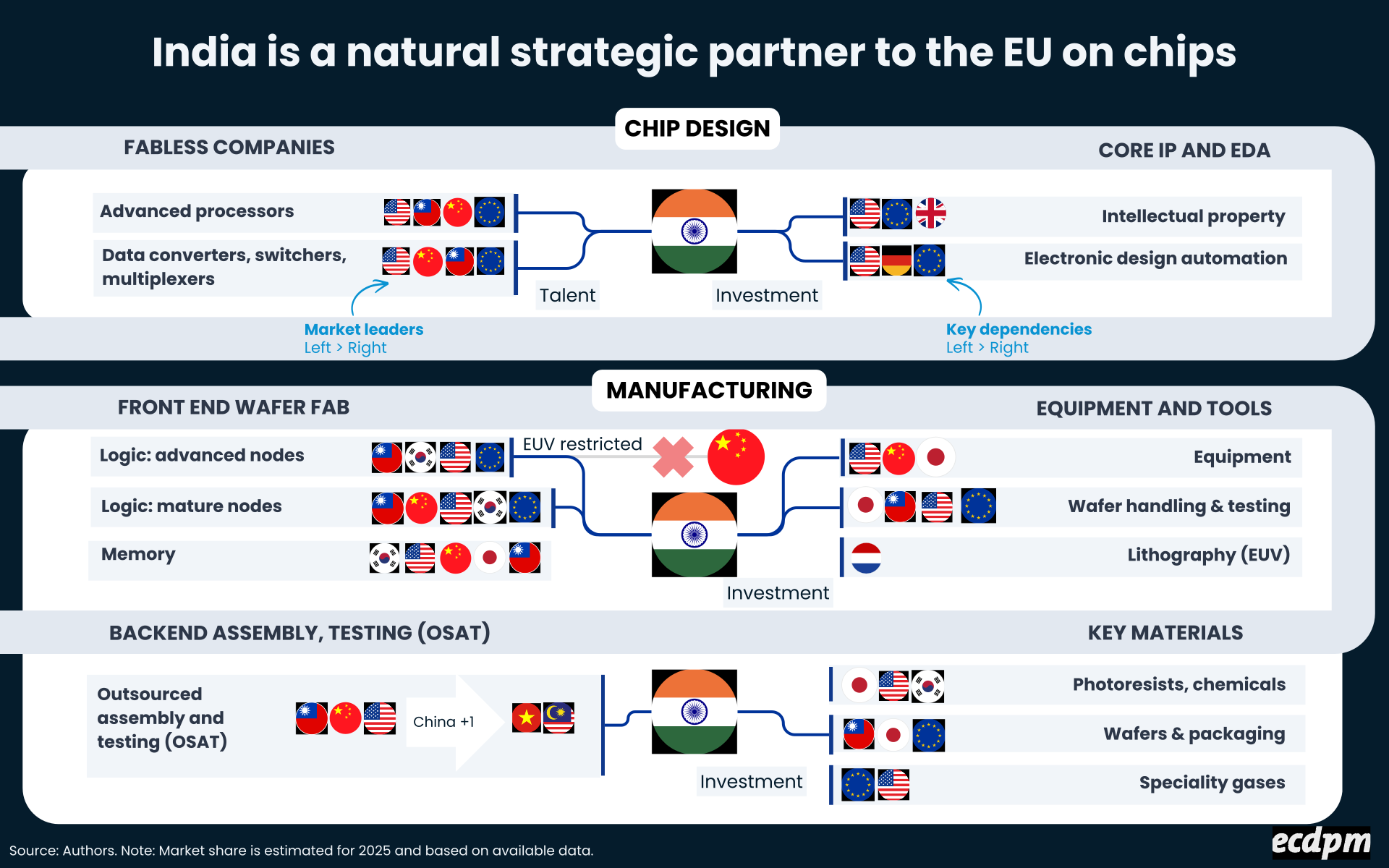
The EU-India TTC is explicitly structured around “critical value chains”, particularly in the digital economy and clean tech industries. There are a number of critical value chains where the EU and India share complementary strengths, economic opportunities and most importantly, leverage (control of key chokepoints). Effective collaboration therefore requires prioritising segments that meet certain geoeconomic and strategic criteria. The infographic below illustrates four such strategic value chains that can act as a capability bridge between the two regions, with a clear geoeconomic case and areas for joint action. This list is by no means exhaustive, but merely reflective of topics that are top priorities on both sides and where complementarities exist.
These are “low hanging fruits”, offering the opportunity to elevate cooperation in line with a logic of economic security and industrial policy within the renewed TTC. The EU-India summit earlier this year was followed up by a visit to Assam in June of a high-level EU delegation led by Ambassador Hervé Delphin. Here, the concept of “blue valleys” was first articulated in the context of a trade corridor focused on perfumes, tea, agarwood, organic foods, natural fragrances and flavours. The idea is to bring European and Indian businesses together across critical value chains, demonstrating a new model of sustainable industrial cooperation by connecting local innovation and enterprise with international value chains and market opportunities that benefit people and are sustainable. Four such practical corridors that have emerged as top priorities:
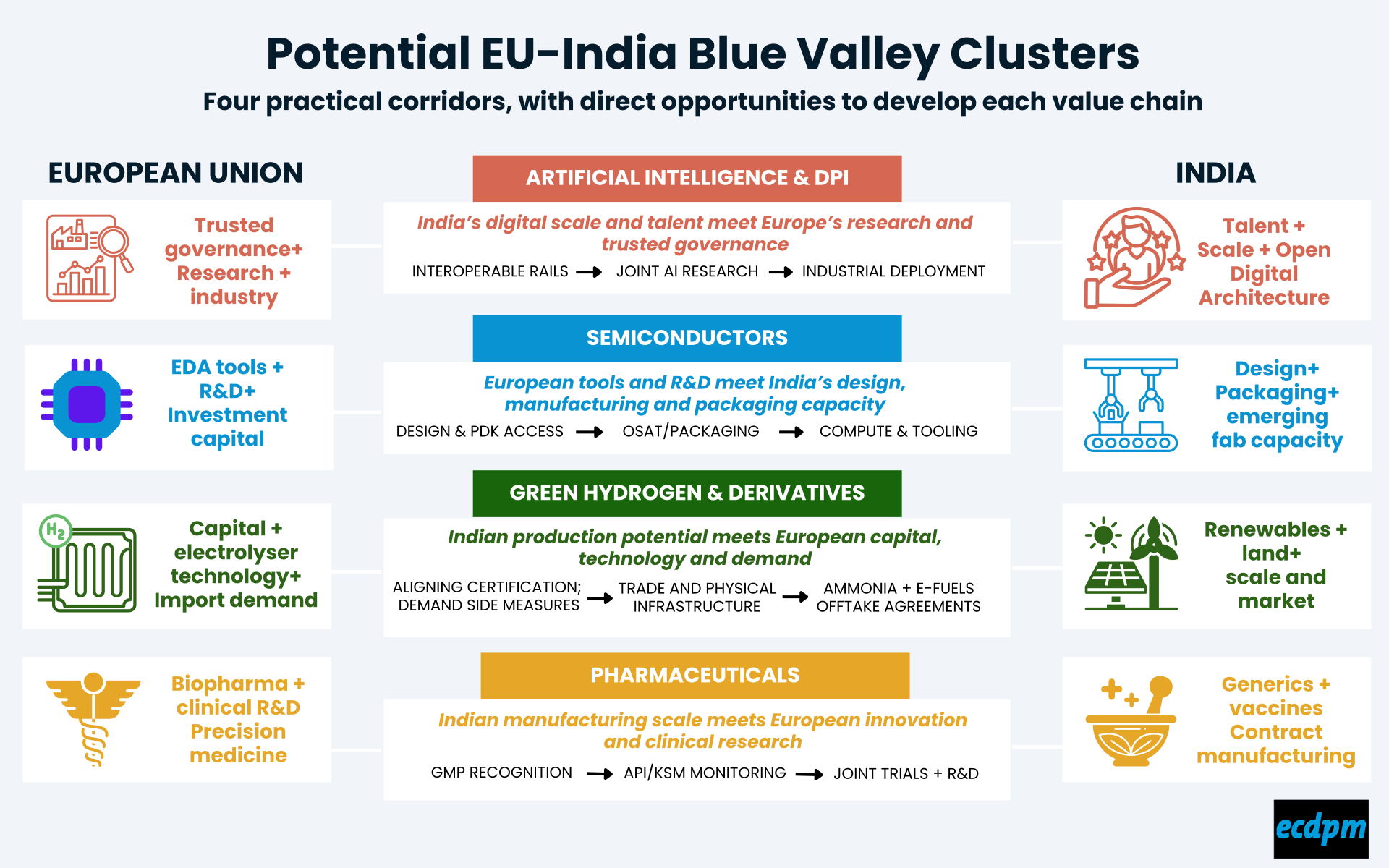
Semiconductors are a key example where the EU-India partnership is well positioned to address the supply chain vulnerabilities exposed by the global shortage during Covid. India’s large reservoir of chip design talent and nascent manufacturing, paired with European R&D and capital, can assist in building more resilient global semiconductor value chains. The rationale for joint collaboration becomes clear when you map out the global chips value chain - while the EU controls key dependencies, its firms could invest further in India to build capacity, while India could benefit from EU R&D and IP.
Other similar value chain complementarities include plugging cybersecurity gaps in Europe with Indian talent, bridging EU demand and Indian supply on green ammonia, or shared interests in developing resilient sourcing and processing of CRMs. Priority value chains would need to be jointly agreed upon, forming the basis for a stepped up dialogue that engages with relevant stakeholders. As we discuss later, such a dialogue would need to engage across multiple angles for each value chain, from joint research and development to priority investments, regulatory alignment to mobility.
Managing critical dependencies
The EU and India share a clear interest in managing and reducing their overdependence on the US and China. This overdependence is felt most acutely in the tech sector - where US platforms and Chinese hardware dominate both markets. The recent technology sovereignty package in Brussels, as well as calls for “sovereign AI” from India are visible domestic manifestations of this concern.
However, regulation alone will not create homegrown tech industries and spawn alternatives - the EU and India will need to architect technical alternatives, and then ensure there is demand for them. India’s model of Digital Public Infrastructure (DPI), which consists of public rails for the digital economy at population scale, could complement European style digital regulation. For instance, Chapter VI of the EU Data Act contains strict interoperability rules for switching between cloud providers. However enforcement remains patchy due to the lack of technical protocols or implementation standards. As we have written before, the technical protocols and APIs underlying the DPI approach could offer the technical means to operationalise parts of the EU regulatory playbook.
This is why coherence between domestic and international policy is more vital than ever. Partners like India have real concerns that the EU’s shifting approach to procurement might impede market access given local content (or “Made in Europe”) requirements in upcoming laws like the Industrial Accelerator Act (see below). Tackling potential tensions now will not only create markets for alternatives to grow, but could also open joint pools of patient, strategic capital investment in critical sectors like manufacturing for both European and Indian companies.
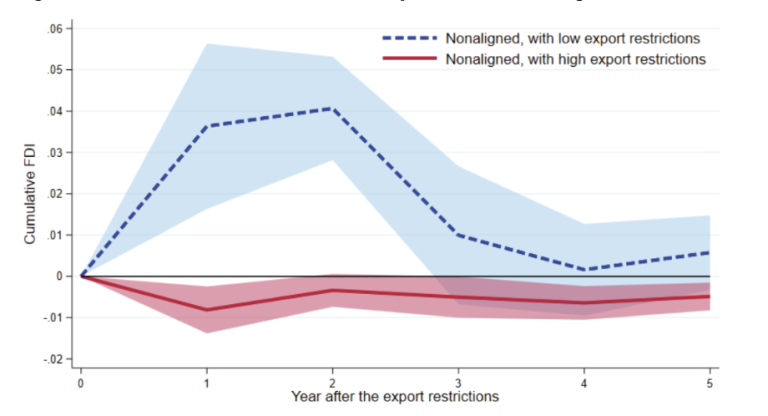
There is clear empirical evidence for such a virtuous cycle to take hold. When global trade splinters into geopolitical blocs (as is increasingly the case), trade between non-aligned countries and countries within a bloc increases when export restrictions are low (see chart below). This is why it is crucial for both sides to prioritise joint action in critical value chains where G2 dominance is a concern, with a view to bolster techno-regulatory alignment, as well as create joint investment opportunities.
Figure 3: Effect of trade restrictions on imports from non-aligned countries
Horizontal cross-cutting enablers
The EU and India should put in place a number of horizontal, cross-cutting enablers to ensure that any deals struck are actually workable in practice. These include scaling up joint research in key areas, facilitating mutual recognition of skills, designing mobility frameworks, ensuring regulatory alignment, joint financing instruments in key value chains, and lowering non-tariff barriers that could impede market access.
First, scaling up joint research cooperation through the Horizon Europe framework should enable the pooling of talent and capital from two world class ecosystems. India’s association to Horizon Europe should increase the scale and ambition of joint research and development in critical areas. Not only will it allow the two blocs to tackle areas with a lot of potential for cooperation, but it can also allow for joint agenda setting around more high-priority topics, beyond the Horizon Europe framework. Examples include steel decarbonisation, digital or space-based connectivity, and supply chain resilience in the semiconductors sector (e.g. leveraging funding through instruments like the EU Chips Joint Undertaking and facilitating linkages with EU research centres such as imec, Fraunhofer, CEA-Leti, etc).
Second, mutual recognition of skills and qualifications and the operationalisation of the comprehensive framework on mobility can facilitate talent to easily flow between the two geographies. In practice, this entails the availability of work, education and business visas in critical sectors, while improving the recognition and portability of qualifications, skills and experience of highly-educated researchers and professionals moving between the two blocs. This will require closer coordination between governments, qualification and professional bodies, and employers to align recognition procedures and make mobility pathways more predictable and accessible, including through initiatives such as the EU-India Legal Gateway. While progress in this area can be politically sensitive and institutionally complex, both sides should work earnestly towards reducing unnecessary barriers to mobility, at both the EU and bilateral level.
Third, industrial policy alignment through regulatory cooperation and coordination is key to deliver on the full potential of the partnership. To give an example, a data adequacy agreement enabling cross-border data flows is vital to drive deeper cooperation in digital services, but also to facilitate ease of doing business across all data-intensive industries. This has a major impact on both the Indian IT services sector and vast swathes of European industry (including from critical sectors like finance, energy, public sector) that depend on those services. India’s Digital Personal Data Protection Act, enacted in 2023 and notified in November 2025, provides the basis for negotiations around data adequacy with the EU, and is modeled closely on the EU’s own data protection law, the General Data Protection Regulation, providing a strong basis for kickstarting negotiations.
Finally, meaningful cooperation will also require joint financing instruments across the two blocs. A great example of how European industrial policy affects the EU-India partnership can be found in how the EU Carbon Border Adjustment Mechanism, or CBAM, is affecting India’s energy intensive industries. While the EU CBAM dominates trade discussions and generates headlines, it is a narrow demand-side tool, as only 6% of Indian steel is exported globally, and less than 2% goes to the EU. The decarbonisation of steel requires strong joint financing instruments to draw in public and private capital. This is also the rationale behind the €500mn pledge to establish a joint EU-India decarbonisation fund as part of the TTC.
Resolving regulatory friction
A number of new EU strategies and proposed laws seek to tackle the EU’s external dependencies, enhancing strategic autonomy or sovereignty by including public procurement rules based on ‘Made in Europe’ requirements for critical technologies. Ensuring that these legislative initiatives do not impede opportunities between the EU and selected strategic partners like India is key. Indeed, the EU must move beyond the assumption of regulatory dominance (i.e. the “Brussels Effect”) and engage with partners such as India on more collaborative terms.
While such regulatory frictions remain, there are also concrete sectoral opportunities to build regulatory alignment. For example, coordination on low carbon product standards, carbon pricing and CBAM are essential to enable EU-India trade in green energy intensive goods, clean fuels and other green hydrogen derivatives. While the EU is planning a review of its Renewable Fuels of Non-Biological Origin production criteria under the Renewable Energy Directive, India has launched the Green Hydrogen Certification Scheme based on ISO standards. Key differences across the two schemes need to be addressed early on to avoid trade barriers.
The upcoming Chips Act 2.0 negotiations provides another crucial example. Across the broader value chain, third-country firms face enhanced supply chain compliance checks and foreign-ownership scrutiny to serve European original equipment manufacturers. These come in addition to increasingly strict "Made in Europe" criteria and public procurement restrictions to favor EU fabricated semiconductors in state-backed and critical infrastructure projects. These rules erect higher market barriers, compelling foreign semiconductor manufacturers to invest in European facilities or risk exclusion from public-sector tenders. While sovereignty restrictions prima facie make sense, they do not account for the complexity of the global semiconductor value chain. They also do not appreciate the clear political and economic rationale for partnering with countries like India if they hope to achieve real resilience in this essential value chain.
|
Another example is the proposed EU Industrial Accelerator Act (IAA), which seeks to boost domestic clean-tech capacity by accelerating permitting for strategic sectors, introducing local-sourcing preferences in public procurement, and tightening foreign investment controls on critical industrial assets. For third-country companies across the industrial value chain—such as Indian producers of low-carbon steel, batteries, and solar technology—these provisions risk limiting participation in European public tenders and increasing supply chain compliance costs. To secure market access, non-EU firms must align their operations with stringent EU carbon-accounting benchmarks, establish localised manufacturing or assembly within Europe, and ensure end-to-end supply chain transparency.
The national security imperative
In addition to resolving economic security related friction, there is also a clear national security case for deeper EU-India technology cooperation. From a European national security perspective, India has a lot of potential; due to natural “functional convergence” against depending on the Chinese; as a military partner to counter instability in West Asia and the Indo Pacific region; and as a consumer of European defense platforms and products. The potential for comprehensive defense cooperation is recognised in the EU-India security and defense partnership, signed during the historic EU-India summit at the beginning of this year. The agreement outlines increased cooperation across several areas, including space, maritime and security, cyber security, and counterterrorism.
Yet, in order to capitalise on these national security convergences, it is important to address the Russia question. Europe’s concerns around technology leakages to Russia are existential and while other geoeconomic interests are aligned, both sides must make efforts to understand each other’s positions, and mitigate these risks in an earnest, granular fashion where possible.
Given that the development of frontier technologies and geopolitical volatility are both accelerating, time is of the essence. This momentum can create the basis for a powerful tech and industrial alliance that actively co-creates alternatives to perceived G2 tech and economic dependencies.
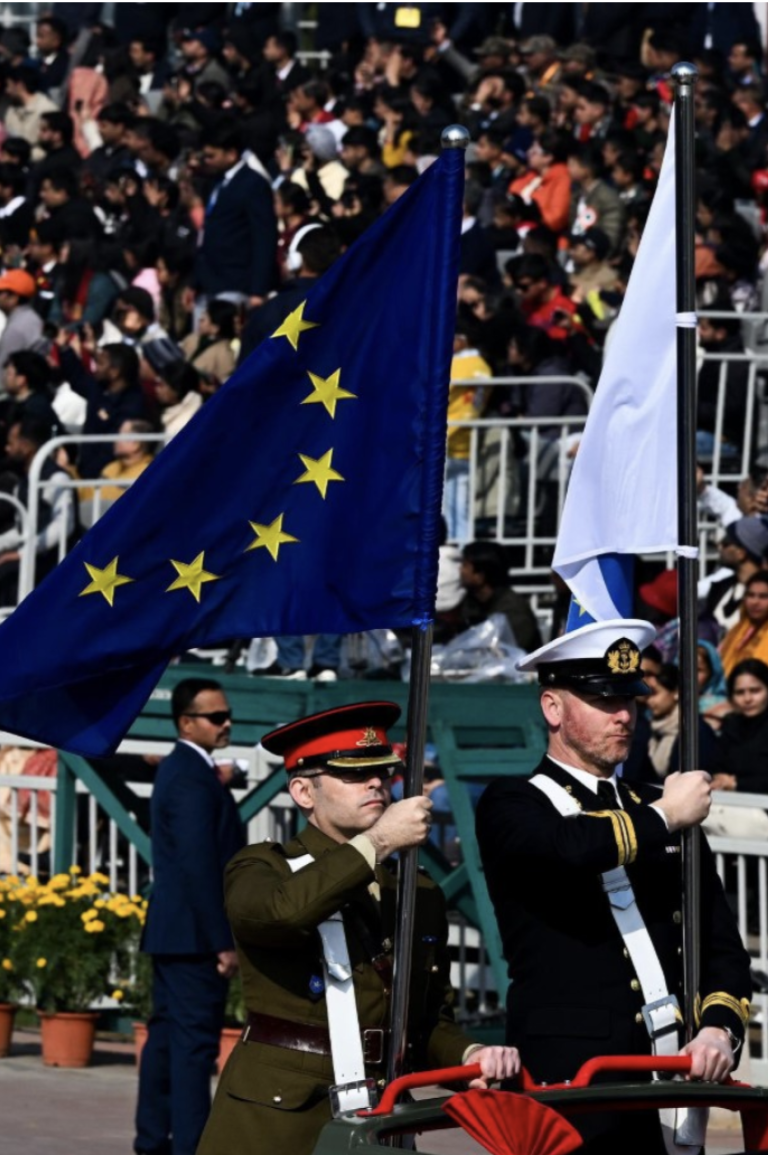
Figure 4: A military contingent representing the European Union (led by Colonel Spruijt acting on behalf of the EU Military Staff) takes part in the military parade as part of India’s 77th Republic Day celebrations in January 2026
Conclusion: A relationship to last
Ultimately, delivering on the partnership’s potential will require that the mechanism for collaboration between the two blocs is sufficiently regular, well resourced and includes the right actors. This might include establishing a more flexible bilateral governance architecture with joint public-private funding through the EU-India TTC. Such an architecture could allow the relationship to move beyond ad-hoc policy visits, establishing ongoing consultations with relevant actors that would provide greater certainty to the industry actors engaged across key cooperation areas. This could include contracting one or more European and Indian policy institutes or think tanks to ensure that exchanges are open to new policy ideas and ways of thinking. Not only would such an arrangement support policymakers in the short-term, but could also help to build out mutual knowledge and understanding amongst experts on each side.
Policy alignment between the two regions is a matter of building mutual trust. Technology cooperation on critical value chains, including dual use tech has exposed tensions. It is important that Europe should not be so hasty as to judge India’s foreign policy by its approach to Russia and understand India’s doctrine of non-exclusivity (or non-alignment), given that India has actively worked to recaliberate its own relationship with Russia in sensitive areas like defense procurement. At the same time, India needs to better understand Europe’s political structure, the role of the EU vis a vis its constituent member states and its preoccupation with human rights and democracy, as well as its existential red lines, for example on Ukraine, the threat of deindustrialisation and political instability. The only way these epochal shifts can occur is if both sides give each other the space to make mistakes and learn from them, and to dramatically scale people-to-people exchanges through swift, granular execution of the above blueprint for operationalisation.
As the French say, qui ne risque rien, n’a rien. The rationale for operationalisation is contained in the timeless advice that Sugriva (below right), a key character from the Indian mythological epic Ramayana, gives the titular Rama (below centre): “making friends is easy, but keeping them over time requires consistent nurturing; as human minds are ever changing, even the greatest love can shatter over petty matters”.
Figure 5: Rama and Lakshmana Confer with Sugriva about the Search for Sita

Acknowledgements
The authors would like to thank Marika Moreschi and Anna Knoll for their invaluable input and constructive feedback. The views expressed in this briefing note are those of the authors and do not necessarily represent those of ECDPM or any other institution. Any errors or omissions remain the responsibility of the authors. For comments and feedback, please contact cte@ecdpm.org, ame@ecdpm.org or gk@ecdpm.org.
A full reference list is available in the PDF version of this brief.