Unlocking investment in the Abidjan-Lagos cassava corridor with digital coordination


Cassava is strategically important along the Abidjan-Lagos corridor. In his commentary, Madieye Ndour argues that investment opportunities in this vegetable and agro-logistics will not become bankable through infrastructure alone.
Cassava is strategically important along the Abidjan-Lagos corridor for food security, urban consumption and industrial uses. However, investment opportunities in this vegetable will not become bankable through infrastructure alone. Roads, agro-parks and processing capacity are essential, but the investment case depends just as much on whether information is reliable, quality is traceable, actors coordinate, and rules are predictable. Digital tools can help address these challenges.
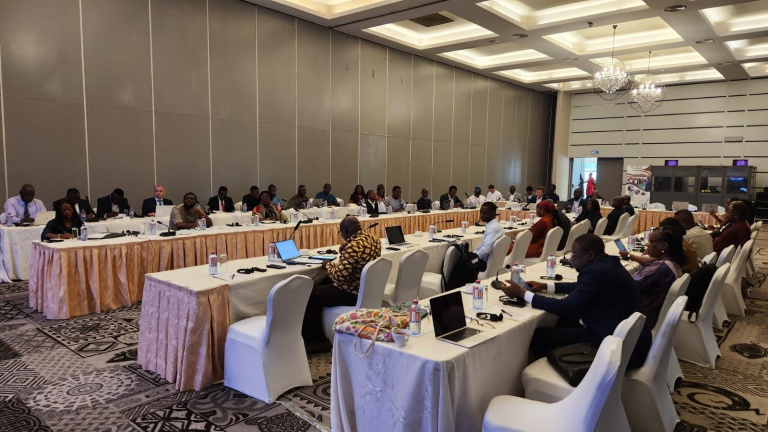
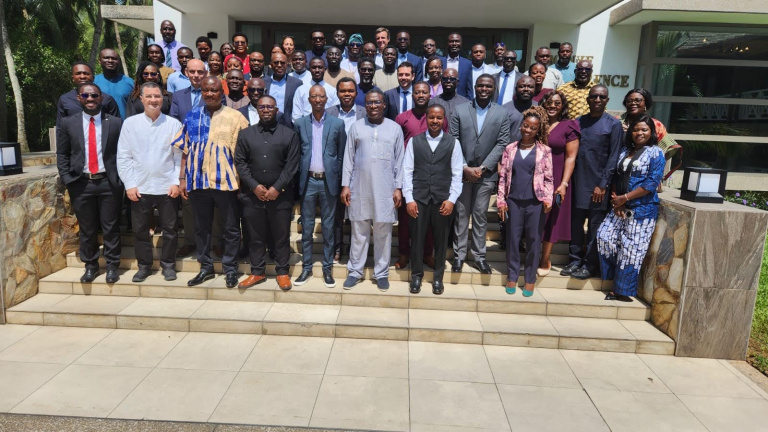
This was a central point emerging from a recent workshop on “Leveraging agrologistics for climate-smart cassava along the Abidjan-Lagos corridor” in Accra– organised in the framework of an ECDPM and AUDA-NEPAD project. The project aims to identify bankable investment cases. This means looking not only at the opportunities themselves, but also at the information, coordination and implementation conditions that make them reliable enough to invest in.
Investment readiness depends on more than infrastructure
The Abidjan-Lagos corridor is a major transport and regional integration project, with a planned highway expected to connect five coastal economies, reduce transit costs and support trade. For agri-food value chains, however, this economic ambition depends on more than physical connectivity. For a perishable good such as cassava, investors need confidence that supply can be aggregated, moved, processed and sold reliably.
This broader challenge was reflected throughout the Accra discussions: beyond questions of infrastructure and financing, participants repeatedly pointed to market fragmentation, weak implementation of existing policies, unharmonised procedures, information gaps, standards and quality systems, informal border practices, limited traceability and weak coordination across the value chain.
These constraints help explain why production potential and market demand in the cassava value chain along the Abidjan-Lagos corridor do not automatically translate into bankable investments. Investors need more than supply and demand: they require confidence that volumes, quality, timing, logistics, standards and offtake arrangements can be coordinated in a predictable and manageable way.
In this context, greater digitalisation can help turn fragmented information into usable evidence for coordination and investment. By improving visibility, traceability and monitoring, digital tools can reduce uncertainty, give finance actors greater confidence and make agricultural value chains more investable.
Digital coordination can make cassava investment more investable
Cassava is strategically important along the Abidjan-Lagos corridor for food security, urban consumption and industrial uses such as starch, high-quality flour and ethanol. However, fresh cassava deteriorates quickly after harvest, production is often fragmented across many small producers, and processing only becomes viable when supply, timing, quality, logistics and offtake are closely coordinated.
Digital tools can help address these coordination challenges. Supplier registries and sourcing maps can help identify who produces, where, and in what quantities. Aggregation and logistics dashboards can help align harvest timing, transport availability and processing capacity. Traceability and quality records can strengthen investor confidence in origin, handling and compliance. Market and offtake information can help connect production and processing decisions to demand. Together, all these tools can make the value chain easier to organise, monitor and finance.
Several existing or emerging tools already speak to parts of this agenda, from production and traceability to market linkages and trade information. Examples include ITC market analysis tools, which can support trade and market opportunity analysis, and FAO’s hand-in-hand initiative, which goes beyond geospatial analysis to help countries identify, assess and promote bankable investments while facilitating partnerships through investment forums. The issue is therefore not simply whether digital tools exist, but whether they can be connected across functions and institutions to support data governance, coordination and investment readiness at the corridor level.
From tools to investment readiness
The practical task is to use digital tools to support the preparation of the types of investment opportunities. For each potential opportunity that emerged from the workshop (for example a modular cassava processing centre, an aggregation hub, a traceability system or an agro-park-linked supply model), digital tools should help clarify who is involved, where supply comes from, how volumes and quality can be monitored, how logistics and processing can be coordinated, what evidence supports the business case, and which operational or market risks remain. By doing so, digital tools can give banks, Development Finance Institutions (DFIs), public actors and private operators a stronger evidence base for assessing whether and how to engage.
-
The next step is to translate the issues raised in Accra into a more operational digital agenda for future investment discussions. Four areas appear particularly important for connecting digital solutions to the investment opportunities identified in Accra: Policy and implementation analysis, to identify where existing regional and national frameworks on standards, sanitary and phytosanitary requirements, data sharing, digitalisation and cross-border trade affect the use of digital tools in practice;
-
Logistics and processing systems, to assess how aggregation hubs, modular processing centres, agro-park-linked supply models and storage solutions can be supported by better digital information on supply, timing, quality and demand;
-
Digital and data readiness, to clarify which tools, datasets and governance arrangements can support traceability, coordination and investment evidence;
-
Investment case development, to turn promising cassava and agro-logistics opportunities into clearer propositions for public, private and development finance actors, supported by digital evidence that reduces uncertainty and makes risks easier to assess.
The workshop in Accra highlighted that digital and data systems can help play a connecting role, linking policy implementation, logistics and processing readiness, and project preparation through information that different actors can use. A useful follow-up would be to clarify which digital functions are needed, who would use and govern them, and which elements should be financed as shared enabling infrastructure or as commercial tools linked to sourcing, logistics, processing or offtake. Without that connection, promising opportunities may remain visible, but still difficult to assess, finance and implement.
The views are those of the authors and not necessarily those of ECDPM.