Power relations and partnerships as the WTO fails
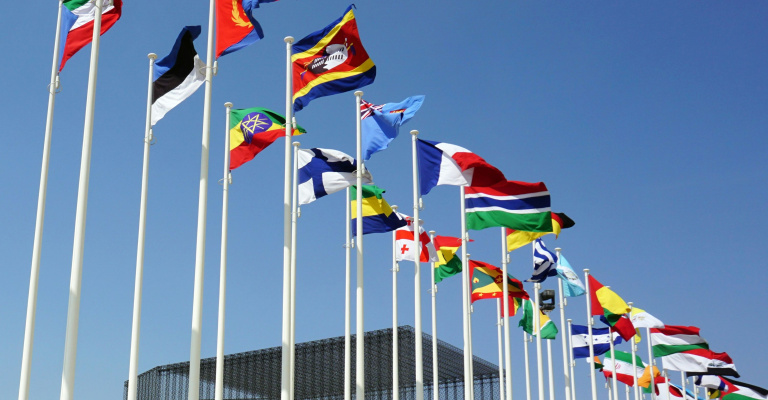

The collapse of the World Trade Organization (WTO) Ministerial Conference, hailed as a disappointment by many – even the US – should come as no surprise. The only question is whether the WTO is dead or merely in a prolonged coma, awaiting revival in better times. And where does that leave us?
Trump’s assaults on the global trading system have not been followed by other WTO members; they have not reciprocated. Yet, the WTO rules are not meant to be a pick-and-choose menu à la carte, to be respected only on the 'bon plaisir' of each member. With its dispute settlement mechanism on hold, the WTO has no enforcement power. Not that Trump would care anyway.
While the collapse of trade talks is another sign of the dire state of multilateralism and the global order today, the WTO has long failed to deliver any substantive outcomes, let alone reform itself. It has not been possible to form significant coalitions of the willing to save or adapt the system, plunging the WTO into increasing irrelevance.
That such an outcome finds its climax under African auspices, at the Ministerial Conference in Yaoundé, Cameroon, under the watch of WTO director-general Ngozi Okonjo-Iweala, is sadly symbolic of the global trading system's inability to be influenced by, and cater to, the interests of developing countries. Remember the days, a quarter of a century ago, when the Doha Development Round was launched, with the hope of achieving a more inclusive and development-friendly trading system?
The so-called middle powers, including the European Union, have been left to fend for themselves and have mostly failed to form effective coalitions
These seem long-forgotten ambitions in a world dominated by two superpowers. The US is indiscriminately using its power to deploy unlawful, unilateral 'Liberation Day' tariffs as a coercive means to impose its conditions, far beyond trade, on partner countries, and, it would seem, conceding only to those who would retaliate and inflict potential pain on the US. Meaning, of course, China! China, which rightly claims that without global trade rules, the law of the jungle would prevail. But China's ballooning trade surplus has suffocated many of its partners while industry subsidies have created an unlevel playing field.
The so-called middle powers, including the European Union, have been left to fend for themselves and have mostly failed to form effective coalitions to resist the US and China’s hegemonic power. Plurilateral agreements, once touted as a complement, if not an alternative, to multilateral trade agreements, have not borne much fruit. There are perhaps a few exceptions, such as the agreement on government procurement, the parallel dispute settlement system, and the possible new digital trade agreement supported by 66 countries, following the Yaoundé deadlock in the four-year extension of the e-commerce moratorium. Emerging economies, such as Brazil and India, have notably not helped in finding a consensus and have not joined reform coalitions with other middle powers, possibly because interests among this diverse group diverge significantly.
There is ultimately no substitute for multilateral rules of law and cooperation
With a fragmented global order, regional and bilateral agreements have gained further prominence. While the effective implementation of the African Continental Free Trade Agreement (AfCFTA) is a top priority for the continent – an endeavour that ECDPM strongly supports with our new African Regional Integration in practice Hub (AfRI Practice Hub) – the gains from integration, clean industrialisation and (cross-border) transformation dynamics are increasingly complemented by partnerships extending beyond Africa, including with United Arab Emirates (UAE), China, South Korea, Turkey, the UK, and of course the EU. The EU has also recently concluded trade and cooperation agreements with Indonesia, Mercosur, India, New Zealand and now Australia. Economic partnerships and free trade agreements have been concluded and enhanced with a range of African countries, and a range of non-binding partnerships as the new Clean Trade and Investment Partnership (CTIP) signed with South Africa. Partnerships and like-minded coalitions, including at the sectoral level, seem to be the way forward these days.
Yet, let us not forget the WTO system, which may be revived and finally reformed in a hopefully not too distant future, and under better auspices, as there is ultimately no substitute for multilateral rules of law and cooperation.
The views are those of the author and not necessarily those of ECDPM.