The Global Gateway and balancing EU interests with genuine partnerships
Authors

- ECDPM
The EU’s Global Gateway is meant to serve both European interests and partner countries’ development priorities. ECDPM has been working throughout the entire process to help strike the right balance between positioning the EU as a geostrategic force and fostering genuine, mutually beneficial partnerships. This page explores our work, impact and where tension still lies.
Last updated September 2026
Global Gateway FAQ
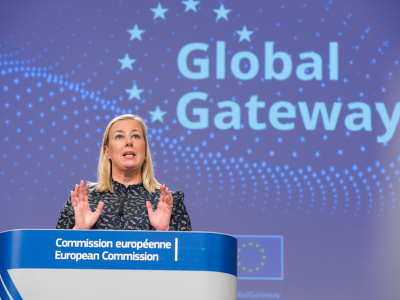
Through the Global Gateway, the EU makes investments to combine global development aims with its geopolitical and geostrategic interests. For instance, global investments in transport, energy, digital, and health will further Europe’s own economic security and competitiveness as well as the partners invested in. Moving beyond traditional aid, the intention is to establish the EU as a trusted global power by creating long-term, mutually beneficial partnerships that align European interests with partner countries’ priorities. From 2024, the strategy now aims to further support the European private sector (including investors), targeting €400 billion mobilised by 2027.
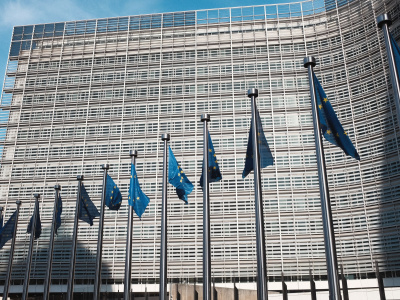
The Global Gateway is the EU’s primary strategy to assert its values and interests on the global stage. Initially positioned as a response to the rising influence of other global powers, particularly China and its Belt and Road Initiative, Global Gateway is the European offer to support EU’s geostrategic interests and partner countries’ socio-economic transformation in a fragmented world.
The articulation of EU’s development cooperation, geopolitics and economic interests is what makes Global Gateway distinctive from past endeavours, and links to internal EU policy objectives related to the competitiveness agenda.
External criticism generally pools around two poles: a lack of transparency and honesty - such as whether the stated finances add up - and concerns over conflicting aims, such as suspecting development and ‘mutual partnerships’ are now subservient to pure European self-interest. ECDPM research has shown a great amount of skepticism from partners, often clear confusion, about what the EU is trying to achieve.
As a ‘think and do’ tank with close, long-term connections to EU member states and African governments, ECDPM has been deeply involved in steering the Global Gateway to not just the EU’s geopolitical benefit, but for truly mutually beneficial partnerships. Our work analyses the reality of the Global Gateway for would-be partners, rather than its supposed intent; how it is perceived; how to boost European private sector and member state engagement; the specific needs of fragile and conflict-affected regions; localisation; as well as specific sectors like digital.
Both initiatives use large infrastructure and connectivity investments to advance economic and geopolitical interests, but they are presented very differently. The EU is keen to market Global Gateway as a “values‑based” offer that emphasises high environmental, social and governance standards, transparency, and debt sustainability, partially drawing on the EU's history of global development aid. The Global Gateway also relies on blended EU grants and guarantees to mobilise private capital, rather than relying solely on state-led finance. In practice, ECDPM research has shown that the Global Gateway is often understood by partners as a direct counteroffer to the Belt and Road Initiative.
A brief timeline2021-2022: Foundations and the Africa pivot The Global Gateway is revealed in December 2021. The first major investment package focuses on Africa, with €150 pledged at the AU-EU summit in February 2022. ECDPM worked on brokering dialogue on the new initiative between African and European stakeholders, and questioned its promises in early analyses on geopolitical relevance, private‑sector buy‑in and the EU’s digital offer in Africa. 2023: The reality check The EU launched over 90 flagship projects, but faced early implementation challenges. ECDPM released a major assessment, alongside country‑level work on Kenya and Cameroon, highlighting top‑down pipelines, complex finance and partner scepticism about the EU’s offer. 2024-2025: Scaling up the Global Gateway The EU then sought to scale up Global Gateway into a more coherent, competitive financial offer, including refreshed targets for private‑finance mobilisation and strategic corridors. ECDPM mapped options and produced in‑depth work on coordinating development and export finance, leveraging MDBs, and adapting investments to fragile contexts, peacebuilding and local realities. 2026: Looking ahead to Europe in a multipolar world By 2026 Global Gateway is framed as the EU’s main external investment and connectivity tool in a more multipolar, fragmented world. ECDPM continues its work on perceptions and development finance, with a recent focus on EU–China–Global South relations to explore how the strategy must evolve when partners have multiple offers to choose between. |
How can the Global Gateway be improved? Listen to the podcast.
The European Parliament votes in favour
On March 26, 2026, MEPs adopted a report with ECDPM input assessing the Global Gateway's impact and future, with 371 votes in favor, 146 against, and 80 abstentions. While supporting its geostrategic role, criticisms included unclear funding, insufficient local partner input, weak parliamentary oversight and Chinese involvement in projects.
ECDPM has argued the EU must strategically assess where, when and how to work with China, rather than avoid it at all costs.
Scaling up the Global Gateway
Rapidly changing dynamics of global economic governance, coupled with rising geopolitical tensions, significantly impacted Europe’s economy and global standing. While it sought to improve its competitiveness, Europe must develop its Global Gateway strategy to create a more comprehensive, coherent and competitive financial offer for the global partners it now clearly needs.
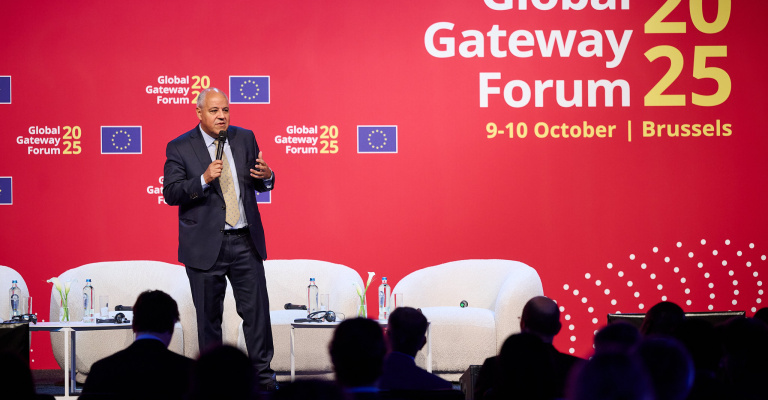
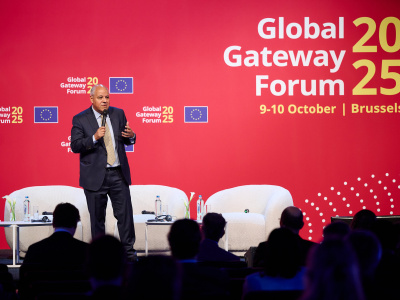
Global Gateway Forum 2025
ECDPM was the only think tank with multiple speakers at the Global Gateway Forum 2025.
- San Bilal moderated a session on 'Two Sides of the Same Coin: Energy Security and Industrial Competitiveness in the EU’s GG strategy', and took part in a roundtable on Africa's health sovereignty.
- Laure Blanchard-Brunac spoke on the panel ‘Looking at connectivity through a geostrategic lens’.
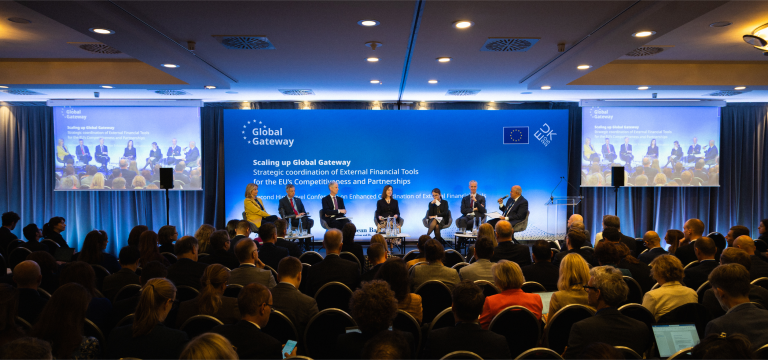
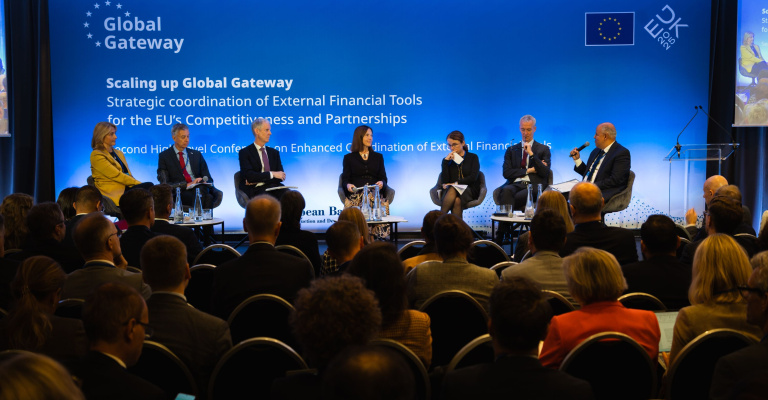
Scaling up Global Gateway high-level conference
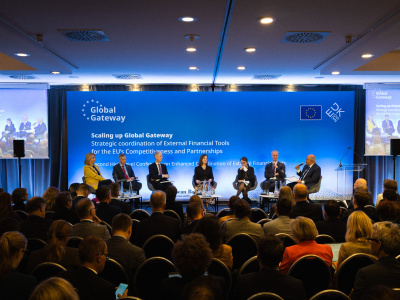
ECDPM together with DG INTPA, DG TRADE and the Danish presidency of the European Council, hosted the second conference on export and development finance enhanced coordination to identify opportunities and gather input for the next Multiannual Financial Framework (MFF). The event proved a significant rise in interest for the topic, with 600 attendees - multiple times the first meeting in January 2024.
The conference was moderated by San Bilal, Andreas Klasen and Laure Blanchard Brunac.
We interviewed senior EU policymakers, public and private finance leaders, and development practitioners for candid discussions on the central challenge facing the Global Gateway, including the director general of EIB Global, the director of public affairs for Nokia, the CEO of Enabel, the deputy director generals for the European Commission’s DG GROW and DG TRADE, and more. Find a playlist of their responses below.
Closed door workshops and advising the European Commission
Meanwhile, in the framework of the TPSDE Facility, an advisory service of the European Commission, ECDPM organised the first of a series of four closed-door workshops to serve as a platform to discuss the political and technical merits, as well as the feasibility, of our initial recommendations for enhanced coordination between Export Credit Agencies (ECAs) and Development Finance Institutions (DFIs).
San Bilal and Andreas Klasen called for greater coordination and complementarity of EU external financial tools, in particular export finance and development finance, to contribute to the EU’s ambitions to mobilise public and private sustainable investments.
Developing the idea further with Laure Blanchard-Brunac, they proposed key elements to ensure greater involvement from the European private sector and public financial institutions under the Global Gateway, while aligning with both the EU’s geostrategic and geoeconomic interests and the EU’s partner countries’ development priorities.
How is the Global Gateway perceived by partners?
Drawing on candid interviews with senior diplomats and experts from Africa, Asia and Latin America, Pauline Veron explored how the EU's international cooperation is perceived by its partners in the Global South.



The two year reality check
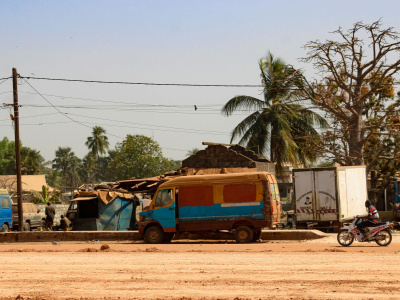
2023 saw the attempt to shift from rhetoric to concrete deliverables with the concept of "Flagship projects" as prominent examples of progress. Over 90 projects were launched across the digital, energy and transport sectors.
How can Europe implement its strategic ambitions?
For ECDPM, this was a chance to reflect on the Global Gateway’s trajectory and remaining challenges. We authored a major assessment of the first flagship projects and whether they met partner needs, presented internally to EU and AU representatives, finding the Global Gateway still faced large implementation challenges, from a top‑down project pipeline and slow, complex financing tools to limited member state buy-in and weak consultation with partners.
The first Global Gateway Forum took place in October 2023, focusing on "localising" the strategy and empowering local and regional authorities as developmental actors.
How is the Global Gateway perceived by partners?
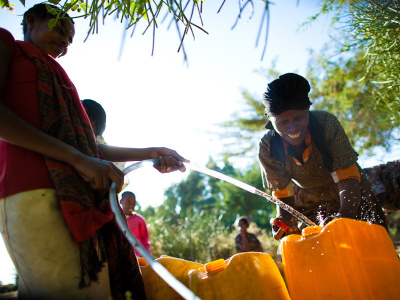
Meanwhile, ECDPM analysed how the strategy had been received in partner countries, particularly in light of competing offers. Despite being a major investor in countries like Kenya, EU officials still struggled to articulate the Global Gateway’s objectives to partners who remained wary of perceived self-interest.
This work developed into a podcast series interviewing key partners in EU development policy, from ambassadors to local civil society leaders and European diplomats.
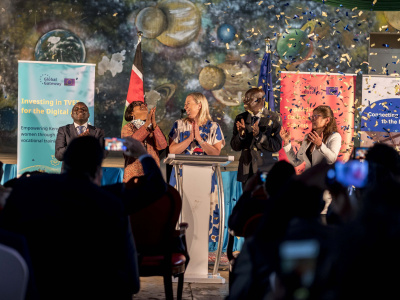

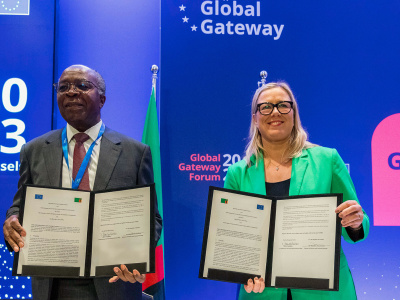

Foundations and the Africa Pivot
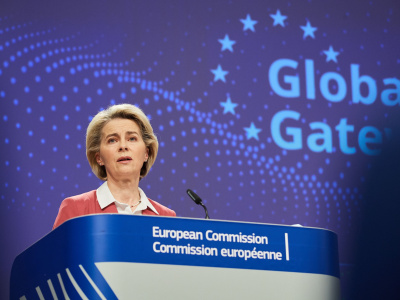
The European Commission and the EU High Representative launched the Global Gateway on December 1, 2021, aiming to mobilise €300 billion by 2027 to ‘connect Europe to the world’. The narrative was heavily focused on post-pandemic recovery, particularly the experience of disrupted supply chains, as well as differentiating the EU offer from China’s, emphasizing ‘links, not dependencies’.
Building on our history of expertise on Africa-Europe relations, ECDPM began seminars to explain the Global Gateway and its implications to partner countries and member states.
Introducing the Global Gateway at the EU-Africa Business Forum
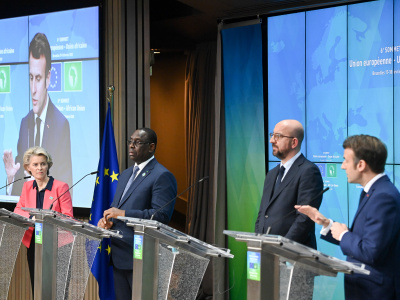
The first major milestone occurred in February 2022, when the Africa-Europe Investment Package was announced at the 6th EU-AU Summit. It dedicated €150 billion - half of the total Global Gateway target - to the African continent.
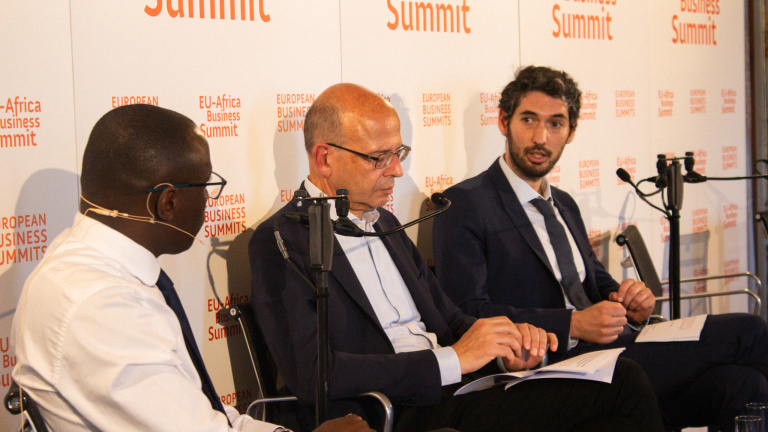
In the run up to the summit, ECDPM was at the connected EU-Africa Business Forum (EABF) to introduce the Global Gateway "Investment Package" to African private sector leaders.
What were the first challenges and opportunities?
Despite the clear promise of a larger, unified EU external offer, Chloe Teevan, San Bilal, Ennatu Domingo and Alfonso Medinilla raised significant challenges facing the project, particularly private sector buy-in. We also focussed on what would be necessary to make the EU’s digital offer a success, such as adapting the Global Gateway to partner needs, as well as providing technical insights on emerging financial derisking mechanisms.
Refining Europe's digital offer to partners
With digital emerging as a major geopolitical battleground, it was an critical part of the Global Gateway, but our early analysis urged the EU to better respond to partner needs through clear digital diplomacy and adapting to partner priorities.