Africa’s maternal, newborn and child health agenda: Strategic for the AU–EU health partnership
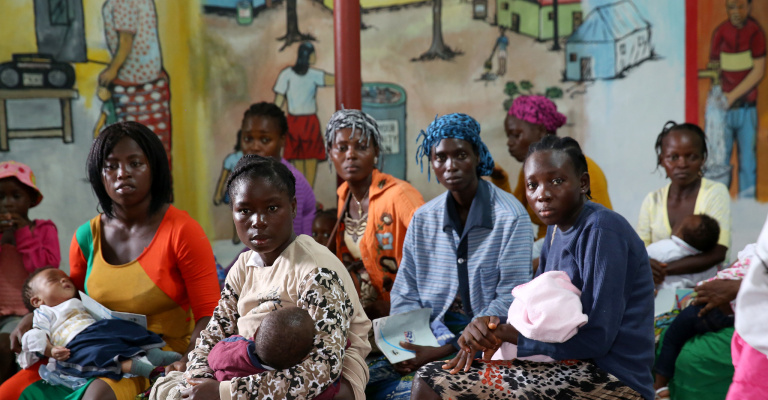

Africa accounts for about 70% of maternal deaths, almost half of all child deaths and 40% of neonatal deaths globally, according to Africa CDC and WHO data. Most of these deaths are preventable. There is no shortage of multilateral discussions – like at the UNGA 81 – or continental policies. The core challenge is turning political commitments into solutions that reach women and children at the country and community level. As global leaders meet in Berlin next week for the World Health Summit, the question for partners, including the EU, is how they can back an Africa-defined agenda in a way that strengthens health systems instead of fragmenting them further.
Mobilising continental leadership
At this year’s UN General Assembly (UNGA 81), the African Union (AU) held a high-level side event on ‘Ending preventable maternal, newborn and child deaths: Africa's health sovereignty imperative’, presenting its AU Champion roadmap on reproductive, maternal, newborn, child and adolescent health (RMNCAH). The event resulted in a high-level communique supported by 43 African countries.
The roadmap’s first asset is political. The designation of Tanzania’s president, Samia Suluhu Hassan, as the AU Champion provides a significant opportunity to place it firmly at the centre of continental political action and Tanzania has already set a good example. The country reduced maternal mortality by 80%, from 556 deaths per 100,000 live births in 2016 to 104 in 2022, driven by stronger political commitment, expanded emergency obstetric care, a growing health workforce and strengthened referral systems.
A critical shift in addressing maternal, newborn and child health
Although global and continental frameworks already exist to advance RMNCAH and reduce mortality rates, slow implementation continues to stall progress. The AU’s Agenda 2063, Africa Health Strategy, Maputo Protocol, Maputo Plan of Action, AU Roadmap to 2030 & Beyond, Campaign on Accelerated Reduction of Maternal Mortality in Africa (CARMMA) and its follow-up CARMMA Plus, show the evolution in continental efforts to provide a policy base for sexual and reproductive health and rights (SRHR), mobilise political will and investments in maternal health, newborn care, adolescent health, and secure sustainable resourcing.
The RMNCAH roadmap builds on these past initiatives and focuses on three measurable goals, known as the ‘Three Zeroes’: a) zero preventable maternal and newborn deaths, b) zero unsafe deliveries and referrals without skilled care and c) zero unvaccinated children. Beyond these health outcomes, RMNCAH sits at the intersection of women’s rights, children’s rights, human capital, primary healthcare, demographic development and health-systems resilience. For a continent experiencing demographic and economic transformation, ensuring that women, newborns, children and adolescents can access quality health services is an investment in Africa’s future, as a healthy population is a key enabler of the demographic dividend.
Sustainable progress requires three shifts: 1) Member states exercise greater ownership in identifying priorities and mobilising domestic health financing, 2) African institutions like Africa CDC act as strategic enablers by providing technical capacity, tracking progress, expanding local manufacturing for essential RMNCAH commodities and pooling procurement, and 3) global institutions and partners align their financing and support behind nationally-led plans.
Towards more coherent EU support in the health partnership
That third shift is where the EU comes in. Health is one of the five priorities targeted by the EU's Global Gateway strategy and a focus area of the AU-EU partnership, with five Team Europe Initiatives (TEIs), including one on SRHR.
The EU is also seeking to align its development cooperation more closely with wider geopolitical priorities, while positioning itself as a credible partner beyond development cooperation.
The EU is also seeking to align its development cooperation more closely with wider geopolitical priorities, while positioning itself as a credible partner beyond development cooperation. Through NDICI-GE, the EU supports human development, and its Global Health Strategy signals an intention to reassert its leadership on universal health coverage and access to SRHR. Additionally, under the TEI on SRHR and its funding to global health partnerships, the EU backs a range of initiatives that contribute to RMNCAH, from addressing postpartum haemorrhage (PPH) and maternal health supplies to vaccination.
The EU already invests in a lot of what the roadmap seeks. However, the more important question is how these investments connect to priorities defined by African countries themselves to bring greater coherence to health investments. The AU’s ‘One Plan, One Budget, One Report’ provides a useful direction, calling for partners to align with the identified country-led priorities rather than add parallel initiatives and reporting requirements that create fragmentation. Three areas stand out:
Turning commitments into action: Three opportunities
Invest in primary health care transformation. African countries have identified primary health care as the foundation and pathway for universal health coverage and Africa’s health sovereignty. Africa CDC’s assessment of maternal and child health across AU member states shows that the solutions are already known. What is missing are health systems to deliver these solutions reliably, equitably, and at scale. This requires greater attention to frontline health workers, community health systems, referral networks, emergency care, essential health commodities and the quality of care. The AU estimates the costs at $295 billion between 2024 and 2030 to sustain RMNCAH in Africa, much of it for human resources, health products and health-system strengthening. Despite the EU’s support, concerns remain that earlier Global Gateway investments focused heavily on pharmaceutical manufacturing, with less emphasis on health systems strengthening and primary healthcare. The €60 million for primary health care in Ethiopia, announced by the EU at UNGA 81, is a sign that this can shift and that support for country-led health systems priorities in partner countries can be alongside the EU’s own interests in health resilience.
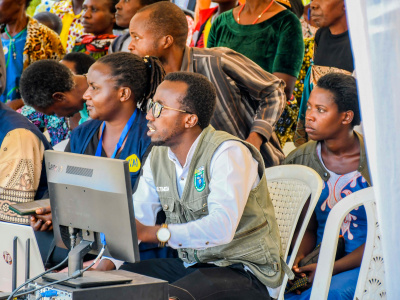
Integrate digital health technologies into health systems. Digitalisation can improve RMNCAH outcomes by strengthening service delivery, real-time monitoring, referral and accountability across the continuum of care. The AHSS digital transformation pillar aims to digitise at least 90% of Africa’s primary health care, including community health systems, by 2035. Mobile apps such as Tanzania’s m-mama facilitate emergency transport for pregnant women and newborns to health facilities. AI is being used to expand access to diagnostics for marginalised populations, for example through AI-enabled ultrasounds to detect pregnancy complications quickly and refer high-risk cases to healthcare facilities. The challenge is to integrate such tools into central health systems rather than treat them as standalone solutions, including investing in skilling the frontline workforce needed to use these technologies effectively. The EU’s Global Gateway funding for digital health solutions provides an opportunity to transform health technologies into sustainable drivers of resilient health care systems.
Strengthen accountability. Accountability is what turns political commitments into measurable progress, ensuring that governments and partners can track whether investments are delivering results. The continental RMNCAH scorecard provides an important African-led initiative for monitoring progress, identifying gaps and tracking performance against targets. The next step is to upscale the scorecard within national and continental review processes, linking RMNCAH indicators to domestic financing and implementation. The EU can support this effort by strengthening health information systems and data capacity, and supporting regular joint reviews that bring together governments, regional and continental institutions, civil society, communities and development partners. This would help move accountability beyond reporting towards using evidence to identify gaps, address bottlenecks and trigger corrective action.
The views are those of the authors and not necessarily those of ECDPM.