Teamwork brings unique energy: Ways forward for ‘Investing in Young Businesses in Africa’
Authors

By 2050 over 620 million young Africans are expected to enter the labour force. Laure Blanchard-Brunac looks back at the latest meeting of the Team Europe initiative ‘Investing in Young Businesses in Africa’, where key priorities were discussed for the year ahead. These include: alignment with Global Gateway, strengthened engagement with the European private sector, private capital mobilisation, and the economic empowerment of women and youth.
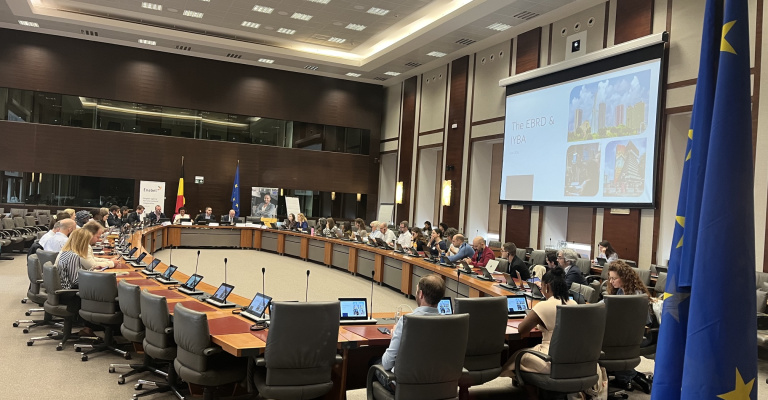
Teamwork carries its own distinct energy – bringing together different skills and perspectives, trusting each member to play their part, and sharing both successes and setbacks in pursuit of a common goal. These are qualities familiar to any football player or sailing crew member, and, as of last 5 June, surely also to the participants of the Management Team (MT) meeting of the Team Europe initiative ‘Investing in Young Businesses in Africa’ (TEI IYBA), initially launched in 2021.
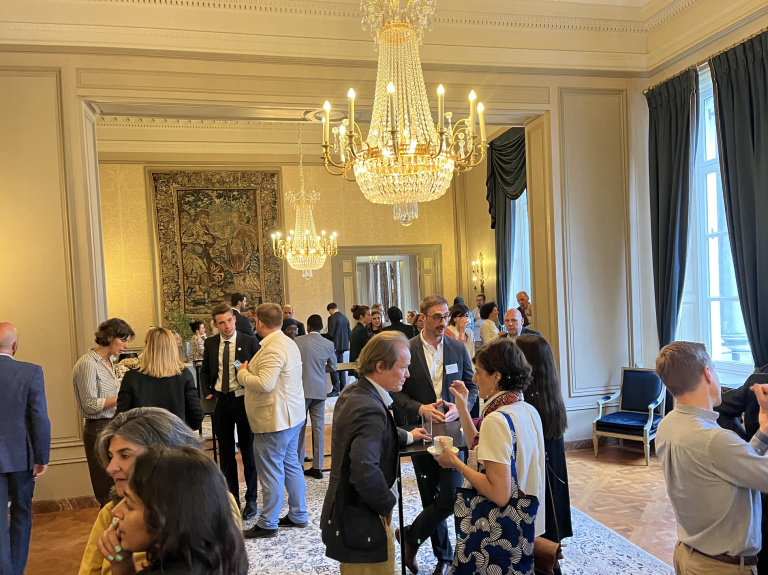
Belgium’s Ministry of Foreign Affairs, currently chairing the TEI IYBA, hosted this bi-annual meeting, bringing together over 40 organisations around the pressing agenda of supporting entrepreneurship and small businesses across Sub-Saharan Africa. As part of the EU Facility for Trade and Private Sector Development (TPSD), I was pleased to support the European Commission and the Belgian Chair, together with Karim Karaki, in coordinating and delivering background research related to IYBA priorities, and in the broader organisation of the meeting.
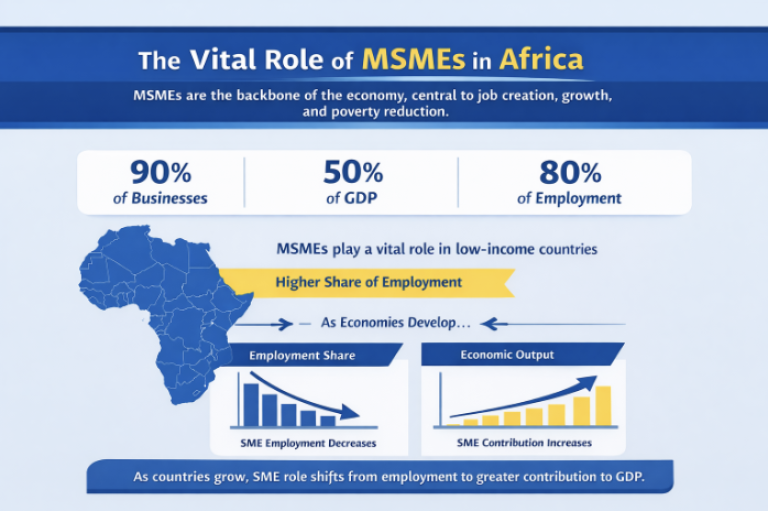
Supporting entrepreneurship in Africa is an issue that receives less political attention in a EU that is increasingly focused on its economic security and competitiveness, and on supporting geostrategic large-scale projects. Yet, with over 620 million young Africans expected to enter the labour force by 2050, recognising the strategic urgency of this agenda has never been more important.
Several European private capital providers, through established networks of institutional investors, philanthropies, and foundations, formally joined the meeting as associated members. Core members – European Commission, member states, European financial institutions and associated members such as philanthropies and impact investors will now work closely together on private capital mobilisation (PCM) towards MSMEs in Africa. This is a key strategic priority of the TEI (and the Global Gateway more broadly), reflecting the shift from aid to investment.
EU Boost Africa programme: Impact and results
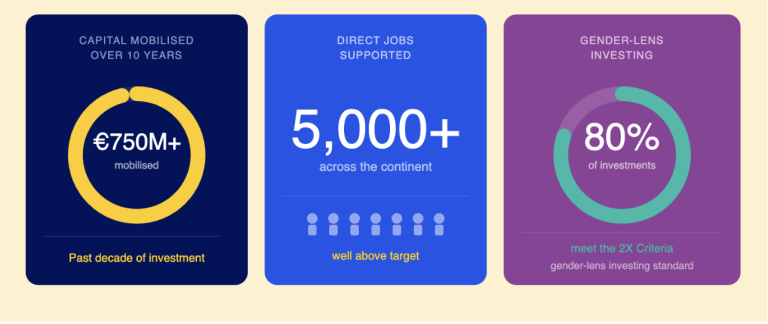
One notable success is the Boost Africa Programme, funded by the EU with up to €60 million and implemented jointly by the European Investment Bank and the African Development Bank. Through junior and senior equity investments in eight venture capital funds across Sub-Saharan Africa, complemented by technical assistance, Boost Africa has mobilised over €750 million in the past decade, supported more than 5,000 direct jobs, with 80% of investments meeting the 2X Criteria for gender-lens investing.
Beyond core and associated members, the meeting also welcomed observers – including entrepreneurship support organisations (ESOs), accelerators, implementing partners of IYBA programmes and several impact funds – with a dedicated session of short pitches for those impact funds currently fundraising. The Belgian chair additionally invited members of the Youth Sounding Board to attend, who provided a timely and welcome reality check on TEI activities and programmes.
More private capital and private sector
Exchanges centred on the two strategic priorities endorsed last autumn: (i) private capital mobilisation, with a focus on co-investments in impact funds, and (ii) deeper engagement with the European private sector in priority sectors to support delivery of the Global Gateway agenda. A dedicated session explored how IYBA programmes could be more closely aligned with the aspirations of young Africans. Members were also introduced to a new communications strategy and a database — soon to be live on a refreshed IYBA webpage – presenting all EU and member state programmes contributing to IYBA’s policy objectives. The meeting closed with a forward-looking discussion on priorities for the year ahead, as the European Bank for Reconstruction and Development (EBRD)prepares to take over the chair from Belgium.
What stood out for me was:
-
The EU, its member states, together with European public and private investors, will keep supporting African MSMEs. Despite a difficult climate of declining ODA, the TEI’s membership is growing: three new core members (Estonia, Czechia and Luxembourg) and ten new associated members have joined. The EU has considerable experience and a rich toolkit for MSME and start-up support – a genuine asset in building deeper investment partnerships with Sub-Saharan Africa. For example, only a few years ago, the EU launched the European Innovation Council to support deep tech start-ups across Europe: It has now supported more than 800 start-ups and MSMEs, with €6.5 billion of funding and an additional €5 billion mobilised from private investors. Some of these start-ups are relevant to African markets.
-
The link with the broader Global Gateway strategy needs to be strengthened. While the TEI has proved it can and will mobilise private capital, which is key to achieving the Global Gateway’s objective to mobilise €400 billion of investments, IYBA programmes will try to engage more actively with the European private sector in priority sectors and contribute to more resilient value chains – locally and internationally – and where they can bring an added value. An inspiring pilot case is Digital Africa, a subsidiary of Proparco (AFD Group), working in partnership with Africa Global Logistics (AGL) to empower African startups in the transport and logistics sectors. This joint initiative, the Accelerate X Fuzé Challenge, supports high-potential tech entrepreneurs with bespoke technical support, seed funding, and potential commercial partnerships with AGL. Yet, moving these discussions to practice will show the limits of working with MSMEs (as only a small portion directly engages in extra-regional trade), and will raise the question of how the TEI can deliver concretely on this agenda.
-
Impact must remain the shared north star of the TEI. Collaboration across so many organisations is often reduced to headline numbers – investment volumes, grant amounts, programme counts – but what ultimately matters is the joint impact of these activities: jobs created, skills gained and entrepreneurs empowered across Africa. Smaller programmes, in particular, risk being overlooked, even when their transformational effect may outweigh that of much larger investment packages.
Looking ahead
With the EBRD taking over as chair for the coming year, the TEI will be led by a European multilateral development bank now expanding into six African countries and widely recognised for its expertise in supporting private sector investment, particularly for MSMEs. The TEI is in capable hands as it responds to the many challenges African MSMEs face in an uncertain global environment. Priority areas for the year ahead will remain alignment with Global Gateway, strengthened engagement with the European private sector, private capital mobilisation and the economic empowerment of women and youth.
Delivering on this ambitious agenda will require securing additional resources for African MSME support in the next Global Europe budget for 2028-34, currently under negotiation by co-legislators. While the next EU budget will face many competing demands – and ODA may well decline further – one must hope that the sustained efforts and commitments of TEI IYBA members will be recognised as an indispensable anchor for the investment partnership between Africa and the European Union.
Published following the TEI IYBA Management Team Meeting, June 2026. The views are those of the authors and not necessarily those of ECDPM.