
AI in Africa: How are Africans using AI to accelerate development?

Authors


The global conversation on Artificial Intelligence is often dominated by a Big Tech narrative of massive datasets and ever-more-powerful generative models. But what does AI mean for the developmental needs and priorities of countries in Africa? Is it a distraction from pressing issues like access to clean water and food security, or a tool to leapfrog these very challenges?

In this episode of 'Europolis: the Global Europe podcast', Chloe Teevan talks to Melody Musoni to explore how African innovators, researchers, and policymakers are shaping an AI ecosystem that responds to local realities. It highlights a shift from being consumers of technology to producers of homegrown solutions that are already transforming sectors like agriculture, health, and education.
The discussion tackles the two sides of the AI debate in Africa: the pessimists, who worry about risks like data bias and the push from Big Tech for profit , and the optimists, who see a chance to tackle long-standing challenges. A central theme is that African countries are determined not to be left behind in the Fourth Industrial Revolution as they were in the past.
Apple Podcasts | Spotify | YouTube
Focussing on Practical Use Cases
A core message of the episode is the importance of focusing on practical, real-world AI applications that create tangible value for communities. Melody Musoni shares several powerful examples:
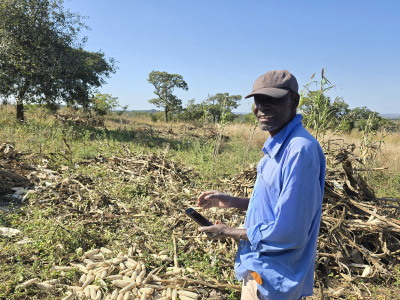
Agriculture: AI-powered mobile apps now provide smallholder farmers with precise, localized weather forecasts and allow them to diagnose crop diseases simply by taking a picture, transforming traditional farming practices. This new "digital agriculture" is also attracting more young people into the sector.
Healthcare: AI tools are enabling online patient consultations from home and handling administrative tasks, which frees up doctors to spend more valuable time with patients.
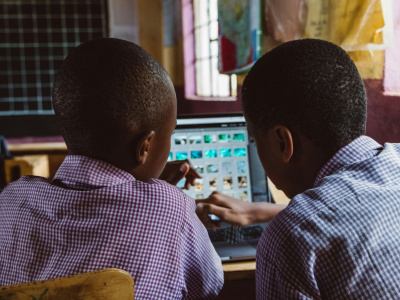
Education: AI offers personalized learning tools and intelligent tutoring systems that can cater to a student's individual pace and needs.
Building a Local Ecosystem
The episode emphasizes that this is not about importing foreign solutions. African innovators are actively building their own AI systems and datasets to address local challenges. A key challenge highlighted is data sovereignty. Melody recounts the story of the Masakhane community, a group working to build large language models for African languages. They initially found that the most comprehensive dataset was the Bible, translated into hundreds of local languages by the Jehovah's Witness organization, which held the copyright. This raised a critical question: "Why does a US-based organization own intellectual property over our own languages?". This spurred the community to collect its own data, demonstrating a powerful drive to build tools that are a true representation of Africa.
The Essential Ingredients for Success
For these local innovations to thrive and scale, several foundational elements are critical. The conversation identifies common themes that policymakers must address:
- Infrastructure: This is the most critical need. It includes building local data centers (the entire continent currently has fewer than Switzerland) and acquiring high-performance computing capabilities to process massive datasets. A reliable energy supply is essential to power this infrastructure.
- Human capacity: Investing in digital skills for the general population and specialized AI skills at the university level is crucial for both using and developing AI tools.
- Data governance: Establishing strong data protection laws and clear governance frameworks is necessary to build trust and manage risks.
Opportunities for EU-Africa Cooperation
The episode concludes that the existing partnership between Europe and Africa provides a strong foundation for cooperation on AI. Rather than starting from scratch, the EU can add an "AI lens" to its current initiatives. Key opportunities lie in leveraging programs like the Global Gateway to scale up investment in the critical infrastructure needs—energy, data centers, and connectivity—that will power Africa's digital future. Further support can be provided for developing national AI strategies and investing in the continent's burgeoning tech hubs.


About the podcast series
Faced with geopolitical and economic turbulence, Europe needs new and better partners to secure its prosperity. Europolis: the global Europe podcast looks at how new dynamics are reshaping relations between the EU and the wider world and how Europe might navigate this new terrain.
Join us as we break down EU policy through insightful conversations with leading policymakers, industry leaders and experts. Discover how the EU could drive innovation, competitiveness, and progress in the global arena, and understand how policymakers are thinking about shaping our sovereign future.