Rethinking women, peace and security in times of war
Authors


Sara Gianesello, Célia Beckmann and Mariella Di Ciommo look at the EU’s new approach to defence, arguing that there is a real risk that the implementation of the women, peace and security (WPS) agenda gets sidelined.
Ahead of International Women’s Day, it is worth remembering the many women who are organising, resisting and fighting to advance gender equality worldwide. Their struggles cut across countries and cultures: from high-risk resistance and advocacy in Afghanistan and Palestine, to the Ukrainian women involved in combat and humanitarian operations and the long fight of Iranian women for freedom and equal rights.
It’s unclear how the rapidly escalating conflict in the Middle East will reshape the space for Iranian women and their desire for equal rights and democracy. What is quite clear, instead, is that the situation in the Middle East is the latest example of military strength by big powers, one that eclipses diplomacy, prevention and protection.
As a group of middle powers, the EU has been pushing for peace through deterrence and is shifting towards a ‘Readiness 2030’ model - focused primarily on defence capabilities and industries. But the escalation in the Middle East is also showing the divisions among EU countries and complicating the broader peace and security ambitions. In the midst of all this, the implementation of the women, peace and security (WPS) agenda, as part of a wider peace agenda, risks being sidelined.
An evolving security landscape
Since 2022, European defence investments have risen sharply – by 42% in 2024 alone. Main factors include Russia’s war in Ukraine, growing uncertainty on the US’s commitments to NATO’s collective defence and rising hybrid threats. The EU is increasingly repositioning itself as a more assertive security actor rather than relying primarily on its traditional soft-power identity. This shift amounts to a structural redefinition of European security, driven by the implementation of the 2022 Strategic Compass for Security and Defence and the scaling up of defence-industrial initiatives, such as the European Defence Fund and the proposed European Defence Industry Programme.
To operationalise this redefinition, EU Commission President Ursula von der Leyen promised a new EU security strategy by mid-2026.
The EU’s WPS agenda and GAP III
The WPS agenda is not inherently at odds with the current EU defence shift. But neither the EU nor the UN’s WPS frameworks were designed with large-scale defence industrial acceleration and expanding militarisation in mind. The UN Security Council Resolution 1325 established the four pillars of participation, prevention, protection, and relief and recovery back in 2000. Since then, the EU has long championed these principles, embedding them in its 2019-2024 WPS Action Plan, 2020 Gender Action Plan (GAP) III and more prominently within the EU’s Common Security and Defence Policy (CSDP) missions.
Our research showed that it was not the GAP III but the 2022 EU Strategic Compass that served as a ‘game-changer’, reinforcing the commitment to WPS and women’s participation in CSDP military missions. The 2022 Strategy and Action Plan to Enhance Women’s Participation in Civilian CSDP Missions, together with the work of senior gender and WPS advisors, also played a key role. These policies were more effective than the GAP III primarily because they resonated better with military staff and their realities.
Times, however, have drastically changed. Today, the EU’s security and defence cooperation is shifting from CSDP missions in fragile contexts to (bilateral) Security and Defence Partnerships (SDPs). Between 2024 and January 2026, the EU has signed nine of these partnerships. WPS figures as an area of cooperation in all the EU’s tailored SDPs, but those are ‘non-binding political frameworks of cooperation’ – leaving much room for interpretation on how to prioritise agendas such as the WPS and how to monitor and assess implementation.
Women, peace and security risks being swallowed whole by the EU’s emerging hard security architecture.
The risk of a narrow ‘deterrence’ model
The risk is a wider gap between WPS and defence priorities, amid the global backlash against gender equality and focus on strengthening military capabilities well beyond CSDPs. Already, the prevention and recovery pillars of the WPS have traditionally received less attention compared to the pillars of protection and participation. If this is reinforced by the current defence shift, WPS risks being swallowed whole by the EU’s emerging hard security architecture – potentially becoming irrelevant to the EU’s current objectives.
The key is not to ‘militarise WPS’, but to ensure that Europe’s defence turn retains and implements a concept of security that goes beyond purely kinetic capabilities. For example, responding to today’s (hybrid) threats requires a broader understanding of security, one that promotes social resilience and inclusive governance, aspects at the heart of the WPS agenda.
Resilient communities, inclusive governance, and social cohesion reduce vulnerabilities to disinformation, foreign influence and internal destabilisation. In other words, hard power alone cannot guarantee security if societies themselves are fragmented or vulnerable; societal resilience strengthens deterrence by ensuring that populations, institutions, and local governance can withstand and respond to threats effectively.
WPS during wartime: Lessons from Ukraine
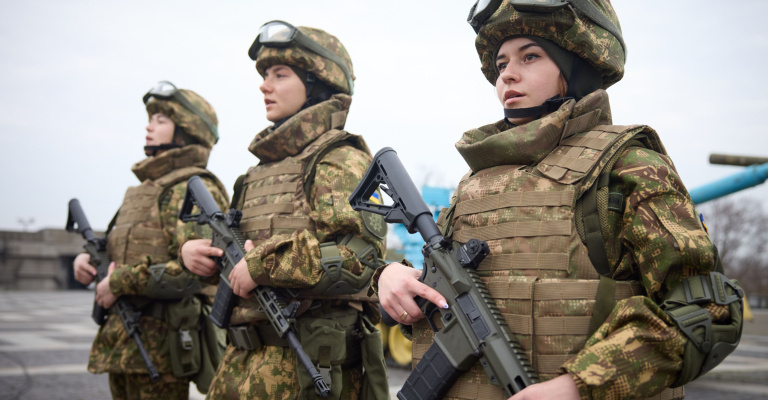
Ukraine illustrates that WPS can remain a priority, even during an active war. It is currently the only country to have updated and implemented its National Action Plan on UN Security Council Resolution 1325. Over 40% more women are serving in the Armed Forces of Ukraine compared to 2021.
More importantly, the WPS has been applied to develop local action plans, spanning from community-level policy documents that translate UNSCR 1325 into specific activities such as gender-based violence (GBV) prevention, service provision to women’s inclusion in security decision-making, as well as community-based safety audits to identify unsafe public spaces for women. Ukraine has also appointed a Gender Advisor to the Command of the Armed Forces of Ukraine, to lead the implementation of gender strategies, ensure compliance with NATO standards and foster gender equality within the military.
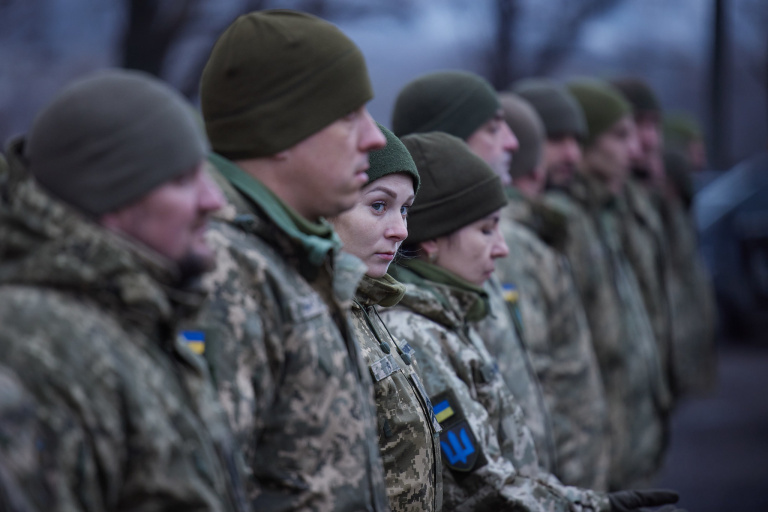
On top of that, the EU Military Assistance Mission in support of Ukraine (EUMAM) has also explicitly integrated the WPS agenda into its training architecture. EUMAM is an atypical CSDP mission because it provides direct, large-scale military training for a conventional war against a major power, conducted within European territory. The mission's mandate includes specific training modules for the Ukrainian Armed Forces on international humanitarian law and the protection of civilians, with a focus on preventing conflict-related sexual and gender-based violence. The Gender Advisor of the EUMAM Special Training Command addresses specific needs and ensures inclusive training practices.
Some lessons stand out. First, WPS can be meaningfully integrated in high-stakes, active-war contexts. Second, institutionalisation matters, as dedicated gender advisors, clear mandates, National Action Plans and embedded training modules create accountability and continuity. Third, when WPS is embedded in core military functions — doctrine, training cycles, command structures — and has political endorsement, it moves beyond commitments, influencing behaviour and standards; and finally, that WPS localisation is critical for WPS national commitments to gain traction.
What's’s next for WPS and GAP IV?
WPS will not automatically survive Europe’s defence turn, it must be deliberately integrated. The work on drafting the GAP IV, bound to start soon, presents an opportunity to create stronger linkages between WPS and defence priorities, potentially including military partnerships and hybrid threat responses. An updated WPS action plan (since the last ended in 2024) could also serve this purpose. The EU needs to ensure that its security and defence model is suited to the current context and remains broad enough to include aspects like WPS principles.
Europe’s pivot to deterrence is necessary but will remain ineffective if it relies solely on kinetic power – the EU must invest in societal resilience.
Unlike its predecessors, GAP IV will need to draw explicit policy linkages to defence, in particular the ‘Readiness 2030’ model and goals. Further, setting measurable objectives and accountability mechanisms for WPS integration in both civilian and military missions, including security and defence partnerships, will also be essential. Ukraine and EUMAM offer important lessons learned for the operationalisation of the WPS, where gender advisors, training integration and community-level initiatives demonstrated that WPS can coexist — and even enhance — hard-security operations.
Europe’s pivot to deterrence is necessary but will remain ineffective if it relies solely on kinetic power – the EU must invest in societal resilience. As the EU hardens its shell to face external threats and redefines its security identity, it would be unwise to view gender equality as a peacetime luxury.
The views are those of the authors and not necessarily those of ECDPM.