The EU's ICC commitment puts its geopolitical credibility to the test
Authors

In 2005, the EU excluded Equatorial Guinea from the Cotonou Agreement for refusing to commit to the ICC, and cut off its bilateral development funding. With Mali, Burkina Faso, Niger and Chad now withdrawing from the Court, the EU must decide whether the same consequences follow.
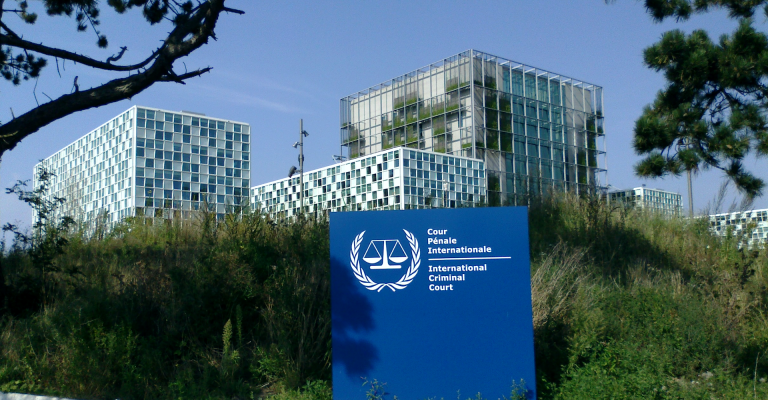
On 19 August, the EU reiterated its ‘unwavering support’ for the International Criminal Court (ICC) after the US imposed sanctions against the new president and a senior trial lawyer. This commitment will be tested soon, as Venezuela and four African countries announced over the last year their intention to withdraw from the ICC. The outcome of this test will tell us whether the EU puts its money where its mouth is as a values driven geopolitical actor, or is letting slip its actual support to a rules-based order. Treating the Alliance of Sahel States, Chad and Equatorial Guinea in different ways would feed the perception that the EU applies double standards, weakening the EU’s credibility as a principled partner.
The ICC – a building-block of the rules-based multilateral order
The ICC is one of the last significant achievements of the post-World War II order, but also one of the first ones to show cracks in that order. The Rome statute established it in July 2002, but three out of the five permanent members of the UN Security Council – China, Russia and USA – refused to ratify it. These three were followed by many others: some because the authoritarian nature of their regimes, systemic human rights abuses, lack of judicial independence and impunity made them candidates for prosecution under its jurisdiction; others because of gentle pressure from one of these powerful global players. Today, only 125 countries have ratified.
The EU instead made adherence to the ICC a symbol of its attachment to a rules-based order, and in June 2002, the Council adopted a common position, mandating the EU and its member states to raise the issue in negotiations and political dialogue with third countries.
The Cotonou Agreement with the African-Caribbean-Pacific (ACP) states, revised in Luxembourg in 2005, was one of the first agreements to implement this mandate. Senegal had been the first country to sign the Rome statute in 1998 and a majority of the ACP states followed, of which 33 African countries. However, the introduction of an ICC-clause in the Cotonou Agreement met a lot of resistance and resulted in a strongly weakened amendment to its article 11(6), whereby the parties “shall seek to take steps towards ratifying and implementing the Rome Statute and related instruments”.
The difference is that this takeover was immediately endorsed by France in the name of stability, and that the continued pro-Western line of the new leadership saved it from the 'coup' label."
While several ACP states had no intention to ratify the Rome statute, most could live with this formulation. Only Equatorial Guinea, worried for obvious reasons, refused to accept this watered-down version of a commitment and wanted to add an explicit declaration to the revised Cotonou Agreement making clear its refusal to adhere to the Rome statute. The EU rejected this declaration and Equatorial Guinea was excluded from the agreement. This had, as an immediate consequence, the discontinuation of all programmed bilateral funding under the EU’s multiannual indicative development programmes. Humanitarian support and civil society action - notably in support of democracy support and human rights protection - continued. Equatorial Guinea was also allowed to continue participating in regional programmes when its non-participation jeopardised their successful implementation in particular with regards to regional integration.
The Samoa Agreement – the successor of the Cotonou Agreement, signed in November 2023, contains an even more prudently formulated ICC clause, reiterating in article 19.3 the parties’ “commitment to fully cooperate with national, regional and international criminal justice mechanisms, including the ICC, consistent with the principle of complementarity. They are encouraged to ratify and implement the Rome statute of the ICC and related instruments, and to further enhance the effectiveness of the ICC”. This was still not enough to persuade Equatorial Guinea, which doesn’t want to be encouraged, and even less to commit to cooperation with international criminal justice mechanisms. Therefore, Equatorial Guinea still doesn’t access EU bilateral, programmed development funding.
The ICC – test of the EU’s attachment to a rules- and values-based international order
Under the collective banner of the Alliance of Sahel States, Mali, Burkina Faso and Niger not only announced their withdrawal from the Economic Community of West African States (ECOWAS), but on 22 September 2025 also their withdrawal from the ICC. This withdrawal will shortly become effective, one year after its formal notification.
The EU and its member states are on bad terms with these countries since the respective military coups of 2020, 2022 and 2023, their anti-neocolonial and anti-Western rhetoric and the consequent suspension of most military and development cooperation. This hasn’t had an immediate legal repercussion yet on their legal status within the Samoa Agreement. Chad, in turn, notified on 27 July this year its intention to withdraw from the ICC. Chad also went through a military coup in all but name in April 2021, when General Mahamat Idriss Déby took power after the death of his father. The difference is that this takeover was immediately endorsed by France in the name of stability, and that the continued pro-Western line of the new leadership saved it from the ‘coup’ label.

The EU now stands for a double dilemma, one legal and one financial. Legally, consistency with past practice would imply excluding the three countries of the Alliance of the Sahel States as well as Chad from the Samoa Agreement. The alternative would be to abandon the EU’s ’unwavering commitment’ to the ICC, allow them to stay, and invite Equatorial Guinea to rejoin.
Financially speaking, with the ‘budgetisation’ of the EU’s development cooperation under the ongoing Neighbourhood, Development and International Cooperation Instrument (NDICI) and the proposed Global Europe instrument under the next multiannual financial framework 2028-2034, there is no longer a legal link between Samoa’s membership and access to development finance cooperation budgets.
But the practical question remains: does the explicit violation of the Samoa commitments on the engagement with the international criminal justice system, including the ICC, have implications for the programmed bilateral development cooperation with these countries? Without financial implications, the signal given to partner countries is that our attachment to the ICC is very relative, feeding the temptation for other worried authoritarians to withdraw.
The EU, a credible global player?
The EU is facing difficult choices. At the global level, the EU cannot settle for a simple declaration of solidarity with the ICC, but must respond to the US Government’s sanctions by activating the ‘blocking statutes’, which block the application of US sanctions within the EU by prohibiting European Banks from complying.
At the African level, the non-exclusion of the Alliance of Sahel States and of Chad from the Samoa Agreement as a result of their withdrawal from the ICC, would further weaken the relevance and credibility of this Agreement, but also undermine the credibility of the EU’s support to the ICC and the ICC itself, as a “cornerstone of the international criminal justice system and the global fight against impunity”.
The only coherent option therefore is to exclude the Alliance of Sahel States and Chad from the Samoa Agreement and the EU’s bilateral development cooperation in the same way Equatorial Guinea has been excluded in the past.
The ICC thus becomes another test ground for whether the EU is a consequential, values-driven geopolitical partner, or a pragmatic, interest-driven partner, not so different in the end from the global players that refused to ratify the Rome Statute to begin with.
The views are those of the authors and not necessarily those of ECDPM.