
Can Japan teach Europe how to balance AI development with democratic values?
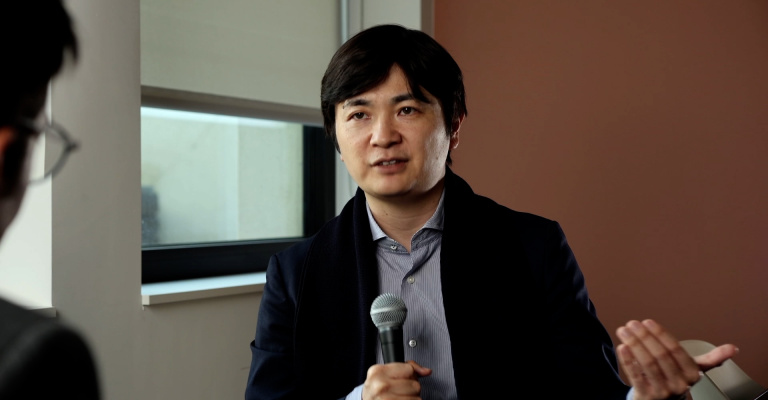


In this episode of Europolis, Chloe Teevan and Gautam Kamath are joined by Hiroki Habuka, one of Japan's leading AI policy experts, to discuss Japan’s unique, agile approach to AI regulation and the potential for future EU-Japan cooperation on tech governance.
Listen on Apple Podcasts | Spotify | Youtube
As the European Union’s role as the 'world’s regulator' is increasingly questioned, new models of digital governance are emerging from global partners. In this episode, digital expert Gautam Kamat discusses his recent research into the Japanese AI landscape.
Japan has long been at the forefront of tech innovation, driven by cultural 'robot friendliness; and the practical necessity of an aging population. Unlike the top-down approach of the EU AI Act, Japan utilizes an ;agile governance; model that emphasises multi-stakeholder collaboration and outcome-based goals. The conversation explores how these two different philosophies - one focused on prescriptive safety and the other on flexible innovation - might find common ground through interoperable global rules.
Key takeaways
-
The necessity of automation: Japan faces severe demographic challenges, losing roughly 900,000 people in population in 2024 alone. This makes the rapid adoption of AI and robotics essential for sustaining the country’s culture and productivity.
-
Agile governance vs. prescriptive law: While the EU often relies on 'hard law' with specific advance requirements, Japan’s model is 'agile'. This approach focuses on defining acceptable risk levels and regulatory goals rather than mandating specific technical conducts that may become obsolete as technology evolves.
-
A different risk mindset: Using autonomous driving as an example, Japanese experts argue that regulators must move beyond the goal of 100% safety. If autonomous vehicles are 90% safer than humans, reducing annual deaths from 2,500 to 250, the macro-benefit to society outweighs the traditional regulatory instinct to ban any machine that could cause a single fatality.
-
Building a "middle power" architecture: In a geopolitical environment dominated by the US and China, the EU and Japan are seeking to collaborate on "responsible AI" based on shared values of democracy, human rights, and the rule of law.
-
Sovereignty in the AI stack: Japan is leveraging its strengths in industrial data, robotics, and electricity (nuclear power) to maintain "digital sovereignty". While it may depend on US-made chips for now, it is developing domestic models specifically trained on Japanese language and ethics.
About the podcast series
Faced with geopolitical and economic turbulence, Europe needs new and better partners to secure its prosperity. Europolis: the global Europe podcast looks at how new dynamics are reshaping relations between the EU and the wider world and how Europe might navigate this new terrain.
Join us as we break down EU policy through insightful conversations with leading policymakers, industry leaders and experts. Discover how the EU could drive innovation, competitiveness, and progress in the global arena, and understand how policymakers are thinking about shaping our sovereign future.


