Beyond CBAM: How Europe and India can clean up steel
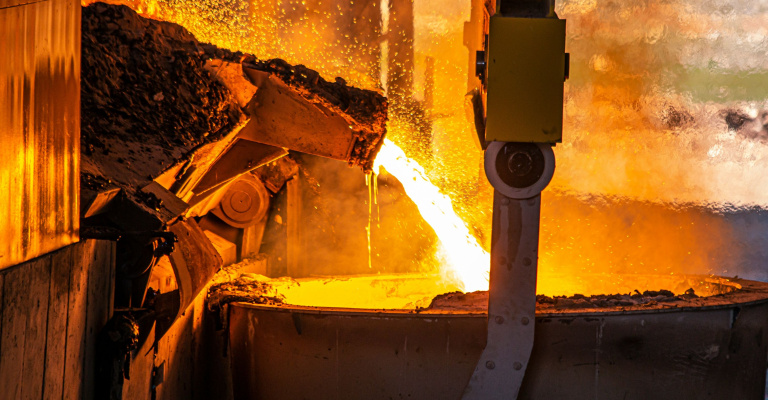


The steel sector alone accounts for roughly 7% of global carbon dioxide emissions. If the world is serious about hitting climate targets, emissions from this heavy industry must fall by at least 50% by 2050. But the path forward is as much about geopolitics and trade as it is about technology.
In this episode of Europolis: the global Europe podcast, host Poorva Karkare sits down with international trade lawyer and Tulip Consulting director Colette van der Ven to explore why the roadmap to green steel runs directly through India, and why the EU's current regulatory approach might be missing the bigger picture.
Listen on Apple Podcasts, Spotify and more | Watch on YouTube
Key Discussion Highlights
The shift to competitiveness: In von der Leyen's second Commission, the European climate conversation has pivoted sharply toward economic competitiveness. Clean tech has become the epicenter of global geopolitical rivalry: the "China Shock 2.0."
Why India is central to the climate equation: While China’s steel production has plateaued, India is the fastest-growing producer in the world. India is projected to double its production by 2030 and account for 20% of global steel production by 2050. It currently holds two-fifths of the world's steel yet to be produced.
The limits of the EU's CBAM: While the EU’s Carbon Border Adjustment Mechanism dominates trade discussions, it is a narrow demand-side tool. Only 6% of Indian steel is exported globally, and less than 2% goes to the EU. To truly decarbonize Indian steel, the conversation must shift from EU regulations to India's domestic decarbonization imperatives.
The unique challenges of the Indian market: India’s steel sector is heavily dependent on domestic coal reserves, faces a shortage of scrap metal, and is comprised of over 40% small and medium enterprises (SMEs) that lack the capital to invest in multi-million-dollar green technologies.
The Blueprint for a Win-Win Partnership
Moving beyond trade barriers, Colette van der Ven outlines four cooperative pillars that could leverage the strategic advantages of both the EU and India:
| Pillar | Opportunity |
|---|---|
| Technology transfer | Jointly adapting EU-patented green steel technologies to fit the unique resource constraints and SME scale of the Indian market. |
| Joint financing | Developing joint de-risking financial instruments to draw in public and private capital, mirroring clauses found in the EU-South Africa Clean Trade partnership. |
| Investment | Finalizing the EU-India Investment Protection Agreement while adding procedural facilitation to fast-track clean energy infrastructure. |
| Regulation | Cooperative standard-setting for green hydrogen, carbon pricing, and carbon credits to build a shared decarbonization ecosystem. |
The Strategic Rationale for Europe
Why should the EU invest resources abroad rather than solely focus on its own domestic industries? The answer lies in transactional, strategic advantages:
"The EU will be better positioned to decarbonize its own steel if it cooperates with India"
Existing forums like the EU-India Trade and Technology Council (TTC) and the Clean Energy and Climate Partnership already offer the ideal platforms to advance these initiatives. The ultimate question is whether both blocks can muster the political will to put real resources on the line.
About the Speakers
Host: Poorva Karkare
Poorva is a Senior Policy Analyst at the ECDPM, analysing the intersection of international trade, geopolitics, and macroeconomic shifts.
Guest: Colette van der Ven
Colette van der Ven is an international trade lawyer, policy expert, and the Founder and Director of Tulip Consulting, a boutique Geneva-based consultancy advising the public sector on legal and policy issues at the intersection of trade, environment, and sustainable development.
About the podcast series
Faced with geopolitical and economic turbulence, Europe needs new and better partners to secure its prosperity. Europolis: the global Europe podcast looks at how new dynamics are reshaping relations between the EU and the wider world and how Europe might navigate this new terrain.
Join us as we break down EU policy through insightful conversations with leading policymakers, industry leaders and experts. Discover how the EU could drive innovation, competitiveness, and progress in the global arena, and understand how policymakers are thinking about shaping our sovereign future.