
Is Ubuntu the secret to unlocking African tech sovereignty?
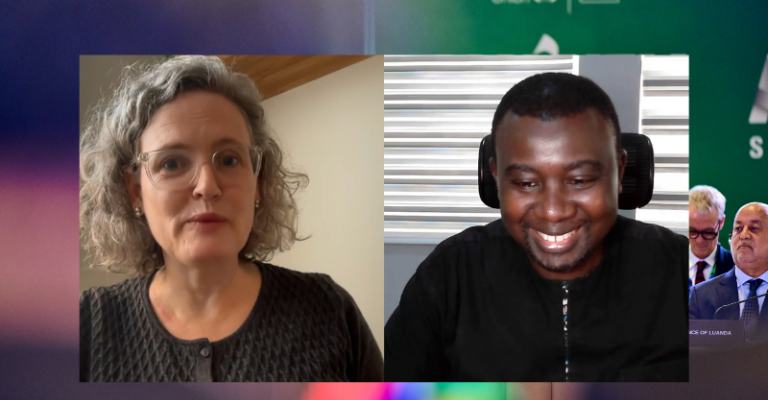


In this episode of Europolis, digital rights advocate and social entrepreneur 'Gbenga Sesan joins ECDPM's Sabine Muscat to explore the intersection of digital sovereignty, innovation, and human dignity. He argues that for Africa to truly thrive, it must transition from relying on aid to attracting investment, and that innovation cannot happen without respecting the rights of citizens.
As the G20 leaders' declaration from South Africa places the philosophy of Ubuntu front and centre, the global conversation is shifting. Africa is demanding respect for its own worldviews, while Europe is increasingly focused on investment and business partnerships. In the digital realm, this raises a critical question: how can the EU and Africa build a partnership that moves beyond "paternalism" to true co-creation?
Apple Podcasts | Spotify | YouTube
Bridging the Investment Gap
While the EU has been effective in exporting its regulatory frameworks - with the GDPR and Budapest Convention serving as templates for many African laws - it remains less visible in the actual technology market. Sesan points out that most African "unicorns" are funded by US dollars and often registered in Delaware. For the EU to compete, he argues it must move beyond capacity building to funding the hard infrastructure and startups that drive the digital economy .
However, Sesan rejects the binary idea of simply shifting funds from development to investment. Instead, he proposes a "continuum" where development aid is essential for building the talent pipeline: taking people from digital illiteracy to a level where they can innovate. Without that foundational support, the pipeline for private investment eventually runs dry.
Ubuntu as the Root of Innovation
At the heart of Sesan's philosophy is Ubuntu - "I am because we are". He reframes this concept not just as a social value, but as the root of authentic innovation, which should be driven by solving collective human problems rather than solely by profit. Crucially, he links this to governance, stating that you cannot demand innovation from citizens if you do not respect their rights.
Sesan also candidly addresses Africa's internal challenges, noting the absurdity that it is often harder for an African to travel within the continent than for a European. For African innovation to scale, these "false borders" must come down. He further challenges Africa's wealthy elites who have made fortunes in extractive industries like oil and gas, urging them to transition that "greedy capital" into "investment capital" for the tech sector before their traditional wealth sources disappear.
A More Mature Partnership
Despite historic criticisms of paternalism, Sesan views the EU as a "more mature" partner than the US, particularly following the erratic policy shifts seen under previous American administrations. The EU’s willingness to discuss the imperfections of its own laws, such as the ongoing reforms to GDPR, is seen not as a weakness but as a strategic asset. By opening these difficult conversations to the world, the EU invites co-creation, potentially strengthening its influence as a global standard-setter.
About the podcast series
Faced with geopolitical and economic turbulence, Europe needs new and better partners to secure its prosperity. Europolis: the global Europe podcast looks at how new dynamics are reshaping relations between the EU and the wider world and how Europe might navigate this new terrain.
Join us as we break down EU policy through insightful conversations with leading policymakers, industry leaders and experts. Discover how the EU could drive innovation, competitiveness, and progress in the global arena, and understand how policymakers are thinking about shaping our sovereign future.

