Experts on the collapse of ODA and what comes next
Authors


Just as global crises demand we work together, the machinery of development cooperation is breaking down.
The continued decline of Official Development Assistance (ODA) - down 23% this year alone - is not the cause itself, but a symptom of the general collapse of faith in the aid model. Something will have to replace it.
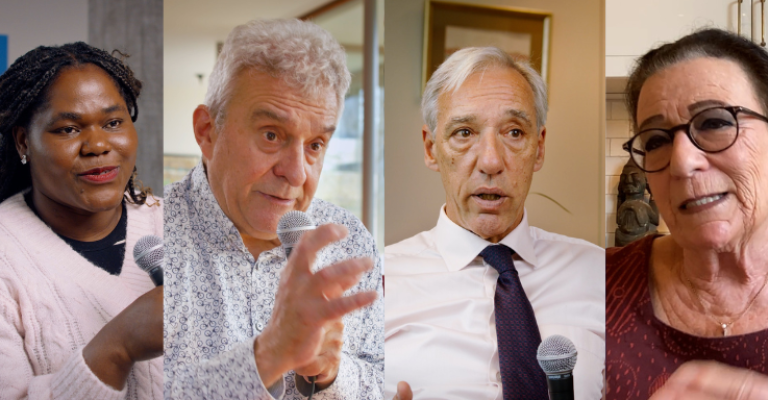
At this turning point, we spoke to the people who shaped and challenged this model: former African Prime Ministers, senior EU civil servants and leading development experts. They describe a system losing its purpose without a clear path to what should come next.
For over 40 years, ECDPM has worked through major shifts in international cooperation, and once again, we’re in a time of profound change. Our world is drifting towards conflict: a new, more effective form of cooperation could not be more necessary.
The old certainties are fading
Assumptions that shaped development cooperation for much of the past four decades have broken apart: a relatively stable multilateral order, a clear hierarchy between ‘donors’ and ‘recipients,’ and the idea that poverty reduction could be pursued at arm’s length from geopolitics.
"We are now again facing a critical juncture in international cooperation… a change that has been coming for years but is now crystallizing even in the practice of the European Union, as illustrated by Global Gateway, the evolution to a much more interest-driven and transactional way of cooperation.” (Jean Bossuyt, ECDPM)
Ruth Jacoby (ex-Swedish DG for Development Cooperation) captures the same shift from another angle: “Donor preferences are changing. Self-interest has become more pronounced and the geopolitical environment is continuing to deteriorate at a very, very scary pace.”
“We need to move from ODA thinking to development cooperation thinking… ODA is dying.”
ODA is losing legitimacy
The problem is not just financial pressure on aid budgets, but a deeper loss of confidence in ODA itself.
Former PM of Niger and ex-CEO of the African Union Development Agency-NEPAD, Ibrahim Mayaki, states it most bluntly: ODA is “contested by public opinions in Europe” and also “contested by public opinions in Africa,” where younger generations increasingly ask why countries rich in land, minerals and resources remain poor after decades of aid.
João Gomes Cravinho was Minister of Foreign Affairs in Portugal, and is now the Special Representative for the Sahel at the EEAS. He reached a similar conclusion from a different direction: “We should [not] turn the clock back and start reinvesting in traditional forms of development cooperation, which quite frankly have been disappointing.”
What comes after development aid?
“The Europe-Africa relationship is increasingly important… the rebuilding of this relationship is now mutually important.” (Walter Kennes, ex-European Commission, DG DEVE)
ODA is weakening but cooperation is still necessary, but there is no clear agreement on what should come next. While one interviewee suggests merely changing the name to something else, most go further.
Mayaki argues for a broader conception of cooperation, involving new tools and new actors, including civil society, the private sector and countries that did not historically sit at the centre of the old aid architecture. "Development cooperation needs new tools… You have new actors… civil society organizations… the private sector… and Eastern European countries which do not have a colonial history.”
Bossuyt adds that this transition raises practical questions, not just conceptual ones: what is international cooperation for, with whom, and through what tools?
Cravinho argues that international cooperation remains “absolutely fundamental,” but must now be rebuilt on the basis of listening more seriously to African, Latin American and Asian perspectives.
It is precisely this act of listening that has been absent from previous models. Former Nigerian ambassador John Shinkaiye distinguished ECDPM precisely for listening to African actors instead of echoing EU positions, and being a space where “difficult questions could be asked,” including “how should Africa and Europe redefine their partnership?” and “how can development cooperation become equitable?”
International cooperation remains absolutely fundamental... but it has to change.
Time for an honest conversation
Aid cuts are unlikely to be reversed, yet shrinking ODA could also force a more honest conversation about mutual interests and shared responsibility.
Handled well, a more transactional landscape and greater leverage for developing countries could push Europe and its partners towards a different kind of bargain. Handled badly, the most fragile countries will be left behind and the EU will drift into a purely transactional stance that undermines its credibility, values and future prosperity.
The core issue running through these interviews is cooperation for what, with whom, and on whose terms.
That is why our 40th anniversary event on 11 June in Brussels will explore what comes next for cooperation after development aid, in panels on navigating geopolitical realignment in a multiplex world and building the trade, technology and industrial partnerships that can credibly replace a failing model.