Beyond ‘Europe finances, China builds’: European preference abroad that works for partners

France’s G7 presidency has put economic security, macroeconomic imbalances and mutually beneficial partnerships at the centre of the international agenda. These themes resonate with Europe’s proposed provisions in the next Global Europe Instrument, which seek to prevent EU external financing from benefiting strategic competitors. Yet the harder question is whether Europe can protect its own industrial interests without undermining partner-country priorities, project delivery and its own development credibility.
The procurement turn in EU external financing
Europe is becoming more assertive and willing to mobilise its international financing to ‘bring home results’. The proposed Global Europe Instrument is explicitly framed as a tool to support EU geoeconomic interests and its competitiveness, and facilitate the deployment of the Global Gateway strategy. In particular, article 20 sets out eligibility requirements under which economic operators may participate in procurement, grant and prize procedures. While the article allows for discretion, it gives the European Commission tools to systematically prevent EU-funded actions from benefiting suppliers that raise security, coercion, sanctions or strategic-dependency concerns. Similar and even stricter provisions already exist under the Ukraine Facility and the Western Balkans Reform and Growth Facility.
Those measures are supposedly country-agnostic, but China is the big elephant in the room. European parliamentary scrutiny on EU contracts awarded to Chinese firms is at peak levels, despite their volumes not being as substantial as media attention around them would suggest. The OECD’s Development Assistance Committee (DAC) estimates that non-DAC donors, of which China is one, received about 6% of EU institutions untied aid in 2023. European concerns are instead better reflected in persistent trade imbalances, unfair competition practices, unaddressed security risks and economic overdependencies, especially critical raw minerals supply chains. The fact that China does not grant reciprocity of access to European firms, for example under the Belt and Road Initiative, is another irritation.
Beyond the caricature: Europe and China in consortia, not camps
In Europe, the debate has largely focused on whether eligibility requirements in external financing will achieve their stated goals of ensuring competitiveness of European firms and support EU geostrategic goals, while not benefitting European competitors. These rules also need to take sufficiently into account partners’ countries' realities and perspectives.
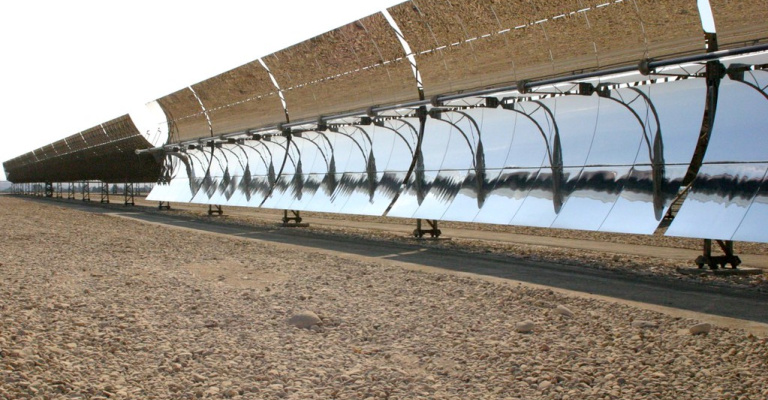
Our (upcoming) research suggests that on the ground, development projects, especially large-scale infrastructure, often see European and foreign businesses, including Chinese, intertwined. A review of a handful of utility-scale energy projects in African countries that involve Chinese and European actors shows that their collaboration is pivotal to project delivery. International financiers and business partners build on their respective expertise and competitive advantages, largely driven by market and project dynamics rather than geopolitical concerns.
The review shows that ‘Europe finances and China builds’ is a caricature.
The review shows that ‘Europe finances and China builds’ is a caricature. Instead, varied arrangements exist in which Europe provides technical assistance, project development, construction capabilities, or niche technologies. In Ethiopia, the GERD, Africa’s largest (and probably most politically controversial) dam, saw the involvement of an Italian contractor for its design and engineering which was complemented by Chinese delivery on transmission infrastructure. The Kom Ombo solar plant in neighbouring Egypt, by contrast, highlights the key involvement of other actors, in this case Gulf-based developers, who shepherded Chinese construction capacity and European technical assistance and financing.
Synergies can be driven by opportunity and be sequential, rather than realised simultaneously. For example, the Tulu Moye Geothermal power station in Ethiopia is a French-Icelandic joint venture. Incubated for many years under the support of African and international partners, the project almost came to a halt due to COVID-19 and Ethiopia's civil war. A Japanese-led consortium that included a Chinese contractor stepped in to move the project ahead.
While these are specific examples, they are not isolated cases either. China has funded one in five infrastructure projects in Africa – four times more than what Europe has – and has built one in three. Corridors provide another useful angle: the Lobito corridor’s example shows disentangling Chinese and European business ownership or participation in critical minerals supply chains is a daunting task.
Even in the absence of formal arrangements, and despite geopolitical tensions, European and Chinese actors are deeply embedded in development efforts. They also show that African development is not a zero-sum game and European companies benefit from this involvement.
Credibility, pushback and backlash
Politically, partner countries consistently signal that national and regional development come first, even when they share concerns about overdependencies, trade imbalances, or fair and sustainable business practices. Whether projects reach financial closure, are completed on time and deliver reliable power, logistics or digital connectivity is what ultimately matters. Any provision that risks derailing those outcomes is badly received.
The sentiment that Europe is too complicated and expensive to deal with could deepen and ultimately create incentives for partners to look further West or East.
Partners may respond by lobbying for exceptions or finding legally-defensible ways to circumvent restrictions. Either of those is financially expensive and politically costly. The threat to co-financing arrangements with multilateral development banks (MDBs), which cannot apply eligibility restrictions by design, and on which Europe heavily relies, may reduce funding options for partners. Moreover, the sentiment that Europe is too complicated and expensive to deal with could deepen and ultimately create incentives for partners to look further West or East.
African actors play a fundamental role as initiators and orchestrators of those projects, through shaping the policy environments, political brokerage or as off-takers and enablers. The GERD was possible only through the orchestration of financing through predominantly domestic resources and determination of the Ethiopian state, given the unavailability of international financing. The rise of Morocco or Egypt as an attractive energy investments destination is linked to explicit visions and state policies. The African private sector is another key player: for example, GreenCo is a local intermediary off-taker that derisks investments in renewable energy in the Southern Africa region. Its collaboration with European DFIs (that provided derisking tools), Chinese contractors (EPC and technology) and the Zambian state (regulatory reforms) allowed the feasibility of the Chisamba and Ilute solar parks in Zambia. Without its financial innovation, these projects would not have seen the light of day given the Zambian state’s inability to assume sovereign guarantees, which would further jeopardise its already precarious debt situation.
All in all, the above means that the leverage that Europe holds on partners to execute eligibility provisions risks being limited, and their repercussions on European credibility as a development partner are severe.
A pragmatic way forward
Safeguards regulating tied aid emerged to protect development outcomes and value for money. Those principles are now being tested by geopolitical reality, but the underlying rationale remains. At the same time, the push for a European preference is going to stay. The question then is how to apply it without turning it into a contested conditionality.
A workable approach entails calibration:
-
Be selective: tighten restrictions only where security or dependency risks are evident and persistent.
-
EU added value: design eligibility around what Europe can realistically offer given partner needs, for example through a sector/technology/specific approach
-
Sequence realistically: apply stronger preferences where European productive or business capacities exist, and phase in additional ones as those capacities develop - so that supply chains remain stable and projects feasible, while strategic firms progressively expand.
-
Build-in partners' perspectives: agree on priorities, including around shared economic security concerns, and local value-addition with partners; and add review points so as to adapt to market or political shifts.
If European preference raises costs, slows delivery, or sidelines partner priorities, it will undermine the very credibility that the ‘mutually beneficial partnerships’ agenda depends on. Further, it risks leading Europe to a self-imposed exclusion from business opportunities, especially in the cases where it cannot provide viable alternatives. This suggests that Europe’s offer could become stronger, rather than weaker, if the block could consider how, rather than if, to work with China.
The views are those of the authors and not necessarily those of ECDPM.
The author thanks Poorva Karkare and Dr. Wei Shen for their valuable research behind this piece.