Africa Forward Summit: From French influence to European partnership?
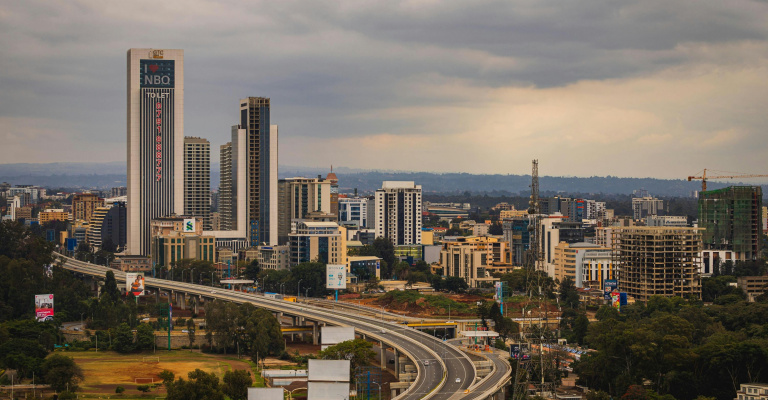

On the 11th and 12th of May, French and Kenyan presidents meet in Nairobi for the Africa Forward Summit. The EU is watching whether France will advance the union’s strategy in Africa or simply (re-)build its own political capital. Much is at stake, from a needed reset for France-Africa relations to testing an EU member state’s ability to sell the Global Gateway’s investment-first approach on its own terms. For French president Emmanuel Macron personally, it is arguably his final chance to convince African partners that France can remain a relevant actor on the continent without reverting to neo-colonial patterns.
Russia, China and Turkey seem to be filling the gap, leaving France no choice but to look elsewhere.
France’s new geostrategy in Africa
Holding this summit in Kenya - a first in an anglophone country - reflects France’s broader strategic shift away from former colonies and its Franceafrique legacy. Already in October 2025, Kenya and France signed a defense pact to support Kenyan defense capacities through training, expertise and technology for at least five years.
This pivot is pragmatic: facing local resistance, France had to leave the Sahel, withdrawing its army from Mali (2022), Burkina Faso and Niger (2023) successively. In francophone countries in general, France’s image has eroded, and Chad (2025), Senegal (2025), as well as the Côte d’Ivoire (2025), suspended military cooperation with Paris. Meanwhile, Russia, China and Turkey seem to be filling the gap, leaving France no choice but to look elsewhere.
Kenya is promising: emerging as a regional power by asserting itself in various fields from diplomacy to security and investments. As the most dynamic economy in the Great Horn of Africa, Kenya attempted to support peace in South Sudan, Ethiopia and Somalia. The country has also developed its green strategy, sourcing 90% of its energy from renewables. This makes it a credible partner.
Holding the summit in Kenya is also highly symbolic. The Élysée has presented Forward Africa as a balanced partnership summit, explicitly rejecting any form of ‘new imperialism’ and emphasising complementarity as the basis for shared economic development. Away from a traditional donor-recipient and aid-based logic, the summit is framed as a win-win partnership to accelerate investments and finance solutions to common challenges. It remains to be seen whether, despite the optimistic rhetoric, this summit will be different and manage to deliver on the high expectations, as the track record of summits is, to say the least, troubled.
What’s on the summit agenda?
French and Kenyan presidents, together with 30 other African leaders, will tackle both economic and security issues. Interestingly, aligning with Global Gateway 2.0 framing, the agenda is set to focus on the energy transition, green industrialisation, the blue economy, AI, digital competitiveness, but also on the reform of the international financial architecture. Most striking will be the plenary on peace and security that shows the importance of this topic between both parties, and one where France could be deemed more credible as the EU.
For Kenya, the summit is key to its own strategy of affirming its pivotal role in Africa's investment landscape. Kenya hopes that closer ties with France will strengthen its influence across the continent and enhance its standing alongside major diplomatic powers such as South Africa, which hosted the G20 Summit 2025. By moving beyond the traditional divide between Francophone and Anglophone Africa, Nairobi aims to position itself both as a leading voice in African diplomacy. For African leaders, these two days represent the opportunity to make the case for tangible solutions - in health, food security, digital competitiveness, energy security and connectivity - and to plant the seeds for the next G7 summit where the continent’s economic future will be centre stage.
Most importantly, if this summit succeeds in giving Africa the equity, investment, and respect it is looking for, it will show that a transition from aid logic to a model of investments and partnerships is feasible. The Africa Forward Summit is a litmus test for what European engagement with Africa can look like in the future.
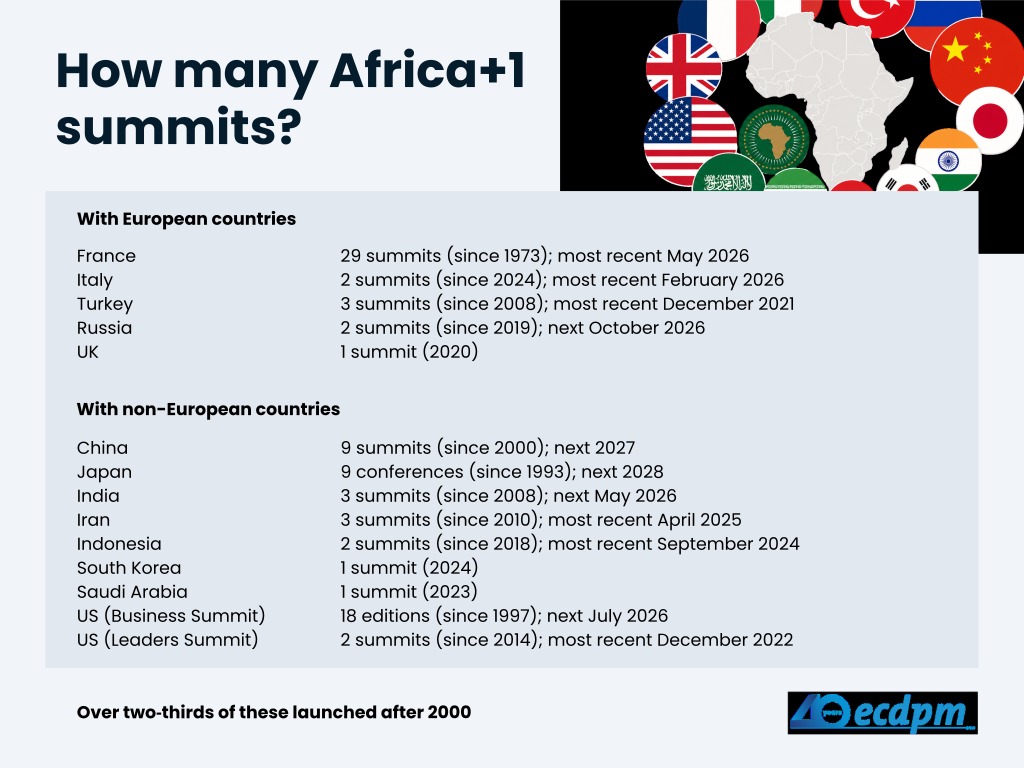
What is to win for the EU in this Africa+1 summit?
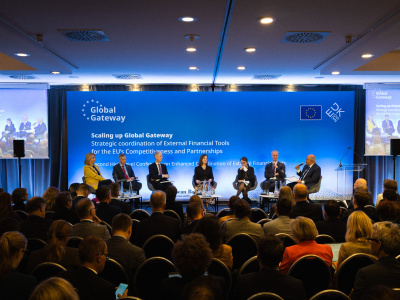
France's strategic repositioning unfolds within a broader EU effort to foster ‘mutually beneficial partnerships’. The Global Gateway strategy is intended to foster a ‘new wave’ of infrastructure investments around the world, primarily aimed at advancing the EU’s strategic and economic security interests, while also increasing the coherence, visibility and effectiveness of the EU’s international engagement. Theoretically, Forward Africa and Global Gateway 2.0 agenda look like a perfect match, and France could be a credible relay for EU objectives on the continent.
France’s bilateral initiatives risk confusing a clear European voice in Africa.
However, another scenario is possible. France’s unilateral repositioning may further fragment the EU’s offer to Africa. Together with the 2025 defense pact – outside any EU framework – France’s bilateral initiatives risk confusing a clear European voice in Africa. Most European member states have also developed their bilateral Africa strategies. And Italy held its Africa-Italy summit in February of this year in Ethiopia. It put forward its Mattei Plan, which, despite being in ‘synergy’ with Global Gateway, is presented as a ‘plan of national interest’ by the Italian government. France’s diplomatic repositioning could further push member states to act outside of the EU framework. This is a central challenge for EU credibility in Africa, which is highly dependent on going beyond bilateralism towards a more coherent and strategic vision.
Much rests on the summit’s success. Whether president Macron decides to use the political capital he builds in Nairobi to feed back into EU institutions - hence scaling up Global Gateway 2.0’s capacity to foster trust between the two continents - or rather to reinforce France’s national influence.
The views are those of the author and not necessarily those of ECDPM.