The EEAS’s difficult teenage years and the challenge of reform

What started with a trickle of news stories in June has gathered pace, building unexpected momentum for reforming how the EU manages and organises its external action. Yet what kind of reform is really possible?
If Europe is to punch its weight in international affairs, it needs major changes to how it organises itself. Criticism of being too late, fragmented, weak, and incoherent has been levelled at the EU for decades. Yet the geopolitical and geoeconomic stakes are now significantly higher. The reason nothing has been done to date is not a lack of diagnosis regarding the big picture of EU inter-institutional failures, but rather the difficulty of altering the status quo. The very factors that make the EU weak or slow are the same ones that make it difficult to reform.
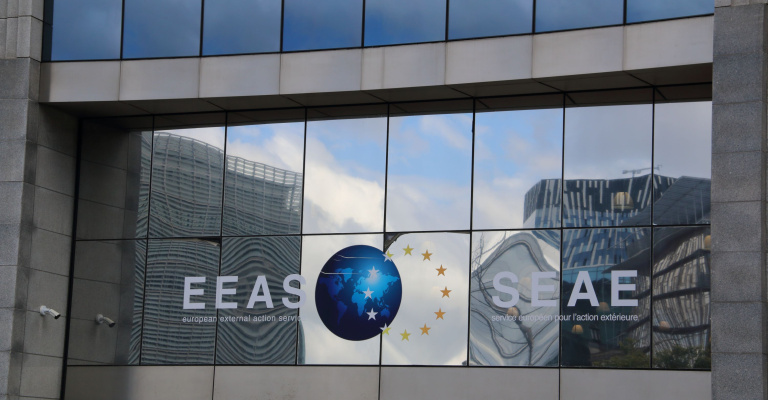
Until France and Germany’s summer intervention, none of the major European players wanted to spend political capital on institutional reform of the EU external action. Consequently, the setup for EU external action has been left mostly untouched since the creation of the European External Action Service (EEAS) in 2010, itself a product of the Treaty of European Union reform in 2009. The EEAS was up and running by 2011, but the world has changed further just as the service has entered its difficult mid-teenage years. Adolescence involves a heightened awareness of one's standing. Institutionally, the EEAS has continually had to assert its position relative to national foreign ministries and the Commission. It has often been picked on and bullied by its counterparts in the member states and the Commission, and it would be grossly unfair to lay the blame for a slow and fragmented EU solely at the door of the EEAS or its High Representative for Foreign Affairs and Security Policy / Vice-President of the Commission (HR/VP).
What kind of reform is possible?
Substantial reform of the EU has often been stymied by reluctance to open the Pandora's box of primary legislation (i.e. EU Treaty reform). Treaty reform could be one route to fundamentally address the EU’s shortcomings. Increased or mandated use of qualified majority voting (QMV) rather than outright unanimity in the Council of the European Union could make the EU quicker and less dependent on one or two member states’ veto. However, major players, including member states, are unlikely to embark on such an uncertain and lengthy process, as treaty reform requires approval by not only all 27 member states’ governments, but also national parliaments, often with a two-thirds majority or more. This is a high political bar in present-day and politically uncertain Europe. So reform ideas have concentrated on what can be undertaken without treaty reform, and a recent letter, signed by 11 member states, proposes several ideas, mainly related to adapting voting on foreign affairs matters that would occur in the Council.
Achieving a new Council decision to change the EEAS will not be easy.
Is the EEAS easily reformable?
The EEAS was established by a decision of the Council of the European Union in 2010 and, unlike the Commission or Council, is not a fully fledged EU institution under Article 13 TEU. The EEAS is instead a sui generis, functionally autonomous EU body, established under Article 27(3) TEU to assist and operate under the authority of the HR/VP, whose principal mandate is to assist the Council and the Commission in ensuring consistency between the different areas of the Union's external action and between these and its other policies. Yet forming the EEAS required not only agreement among all 27 member state ministers, but also consent from the European Commission and consultation with the European Parliament. The original proposal for the organisation and functioning of the EEAS came from the HR, as required by the TEU. Yet in reality, there was extensive consultation with the major players before the proposal was submitted.
Achieving a new Council decision to change the EEAS will not be easy – firstly because, following the logic of the creation of the EEAS as noted in the TEU, the proposal should come from the HR/VP. Current HR/VP Kallas does not seem a fan of reform. But even more so because the 27 member states cannot decide between an intergovernmental model, preserving or even extending collective member state control, and the more federalising approche communautaire, which pools authority through the EU's supranational institutions, most notably the Commission. These fault lines are fundamental, and it will be difficult to reach the unanimity required amongst the 27 member states.
While various ideas, including increasing the responsibilities of the HR/VP and EEAS, were originally reported in June, recent press coverage has focused on empowering the HR/VP specifically in their Commission capacity, while transferring significant portions of EEAS personnel to a strengthened Commission, as noted in this document leaked to Euractiv. The deal being mooted is that EEAS directorates transferred to the European Commission would be accompanied by the HR/VP having more coordinating power over other Directorate-Generals and Services of the Commission that have a clear external dimension as an empowered Executive Vice President.
The levers of power in EU external action
From the very outset in 2010, the HR/VP and EEAS had to navigate the fact that they had neither the regulatory, trading, or budgetary powers of the Commission, nor the real foreign and security affairs competencies of the member states. Furthermore, since President Ursula von der Leyen's 2019 declaration that the Commission would be a "Geopolitical Commission", it has steadily expanded its ambition and capacity to engage internationally beyond traditional external domains like trade, humanitarian aid, development, and enlargement into defence industries and beyond. Indeed, an increasing number of the Commission’s internal policies, from technology and climate to AI and migration, have a very strong external dimension. Recent proposals from the European Commission for the multiannual financial framework and a €200 billion Global Europe Instrument for 2028–2034 give more flexibility to the Commission, with a reduced and hardly visible role for the EEAS – a move that, as reported by ECDPM, has been somewhat resisted by member states and the European Parliament who themselves want more, not less, strategic steering or oversight. A third issue is that EU summits are led by the President of the European Council, not the HR/VP. So the powerful levers of the EU’s external action resided not in the EEAS, but elsewhere from the get-go.
On top of this, from the outset, the EEAS has suffered from leadership and senior staff that struggled to navigate and master the essentials of Brussels politics, and arguably did not even invest enough in trying to understand them. This would mean robustly defending and forwarding certain issues yet choosing battles carefully. This is not just an issue with current leadership, but a decade of rather transitional senior management that did not seek to engage in the difficult and unglamorous work to transform the organisation into a more targeted, efficient, and rapidly moving administration. Furthermore, due to its staffing structure, the EEAS could not foster the same institutional loyalty, career incentives, or disincentives that national diplomatic services and the Commission provide. This has been the Achilles' heel of the EEAS and EU delegation staff since the beginning. Increasing loyalty to the EEAS’s mandate and the quality of EEAS staff would go some way towards improving this, but the exact mechanism is far from straightforward for a service that also requires national diplomats to be appointed within it. This has at times led to unseemly battles and unhelpful ‘deals’ to place respective nationals in key posts, and could result in self-inflicted strategic blunders as the EEAS was not strong enough to resist member states pushing for too many of its nationals in certain parts of the world.
It is difficult to really gauge the relative strength of the reform agenda.
An opaque process with no clear end in sight
All of what is happening now regarding possible reform is happening behind the scenes, with papers, non-papers, proposals, and other administrative homework circulated mostly to a limited number of European officials alongside regular leaks and briefings to the press. The leaks are being spun in various ways, and certainly some of the clashes now extend beyond bureaucratic politics to personal power struggles. It is difficult, therefore, to really gauge the relative strength of the reform agenda. Publicly, France and Germany originally were pushing for a discussion at the October European Council and potential reform proposals by the end of the year. It is not yet clear what exactly came out of the EU Foreign Affairs Ministers' informal Gymnich meeting on 2 September, but HR/VP Kallas herself asserted that, “There was a broad support for the current institutional setup, but all agreed that it has to be better implemented. It was clear that Member States want to keep steering European foreign policy.” Yet it doesn’t seem this attempted reform process has entirely run its course.
In the end, any reform proposals will need a solid legal and agreed administrative basis to hold, which will have to be negotiated and then formally agreed upon. Despite ongoing press speculation, it remains very unclear where this will eventually lead, making firm predictions difficult regarding the impact on the EU’s development cooperation and wider international partnerships.
The author would like to thank the valuable feedback received from Philippe van Damme and Alexei Jones on an earlier version of this piece.
The views are those of the authors and not necessarily those of ECDPM.