Watch: Launch of the Afrobarometer flagship report - Beyond borders: Citizen perspectives on a shifting global order

Afrobarometer, in partnership with ECDPM, hosted an event to share findings from Afrobarometer's flagship report, Beyond borders: Citizen perspectives on a shifting global order.
The launch convened senior policymakers, diplomats, researchers, think tanks, academia, civil society organisations, and media representatives to discuss the findings and their implications for Africa's engagement with the international community.
About the report
The 2026 African insights report, the third in Afrobarometer’s annual flagship series, draws on nationally representative surveys across 38 countries surveyed in 2024/2025 to examine citizen attitudes on five aspects of Africa's relationship with the world:
- Trade: Do citizens support economic openness at a moment when parts of the developed world are retreating from it?
- Migration: How do Africans view free across borders movement? What is driving so many, especially the young, to consider leaving? And how do they view those who arrive in their countries from other countries?
- Great-power competition: In a world that increasingly demands that countries pick sides, whom do Africans look to, and are they willing to choose?
- Global voice: Do they support – and feel supported by – their regional and continental representatives, and back their calls for greater African representation in global institutions?
- Climate change: How do citizens view this global crisis and whom do they hold responsible for fixing it?
The report contributes evidence-based insights to ongoing discussions about reforming global governance, strengthening multilateral cooperation, and advancing Africa's interests in international forums
Agenda
15:30 | Registration
16:00 | Welcome and Introductions, Virginia Mucchi, Associate Director, Outreach and Impact, ECDPM
16:10 | Presentation from key insights from Afrobarometer’s Flagship Report on international relations and Africa’s role in global policy debates.
- Josephine Sanny, Communication Director Afrobarometer
16:40 | Conversation with:
- Ambassador Dr. Malebo Mabitje-Thompson, Embassy of South Africa to the EU
- Francesca Di Mauro, Deputy Managing Director, European External Action Service
- Moderator: Kathleen Van Hove, ECDPM
17:10 | Q&A
- ECDPM moderator
17:30 | Closing Remarks and vote of thanks
- Felix Biga, Chief Operating Officer at Afrobarometer
17:45 | Networking drinks
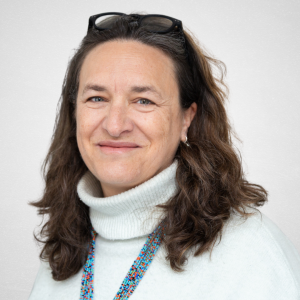
Closing remarks by Felix Biga, Chief Operating Officer, Afrobarometer
Let me start where this report starts - with African citizens.
In the last two years, 50,961 Africans in 38 countries sat down, face-to-face, in the language of their choice, and answered a stranger's questions about their lives. Not about what Brussels thinks about Africa. Not about what Washington or Beijing thinks about Africa. About what _they_ think.
This 2026 flagship report tells us something profound:
45% of Africans have considered emigrating. Not out of adventure, but out of despair about jobs and poverty. 56% say Africans should be able to move freely across borders, but only 23% say it is easy to do so. Citizens want strategic non-alignment - they see China's influence positively at 62%, the US at 53%, the EU at 50% - they don't want to choose sides, they want partnerships that work.
Where else would you get that data? That nuance? That truth, directly from citizens, comparable across 38 countries and over 25 years?
Nowhere else. Only Afrobarometer.
And that is why I want to use these closing remarks to talk about something less glamorous than findings, but more urgent than findings: how we fund this essential African research enterprise.
Afrobarometer is 27 years old. It has conducted more than 400,000 interviews. It is arguably the most important independent source of data on African democracy, governance, economy, and society that exists. It informs the Ibrahim Index, the World Bank Governance Indicators, EU programming, AU strategy, and investment risk models.
It is African-led, headquartered in Ghana, implemented by 40+ African national partners, coordinated by CDD-Ghana, IJR in South Africa, IDS in Nairobi, and IREG in Benin, with technical support from Michigan State and University of Malawi.
It is a public good in the purest sense - all data are free, open-access, available to anyone.
And yet, this public good lives from project to project, grant to grant, cycle to cycle.
Excellencies, colleagues, friends - we cannot continue to treat essential research infrastructure as a short-term project.
You saw it in our 2025 Annual Report. We started last year with exuberance - Round 10 in full swing, dissemination across the continent. And then, the notice: USAID closure, termination of a long-standing partnership. Overnight, a pillar of our budget disappeared. Not because of performance. Not because of relevance. But because of politics far beyond Accra.
This is what episodic funding does. It exposes a resilient institution to extreme volatility and uncertainty. It forces us to spend time chasing the next 18-month grant instead of building the next 10-year data series. It threatens continuity in countries where trust for face-to-face interviews takes years to build. It makes it impossible to retain the best African methodologists, data scientists and communicators who need stable careers, not gig work.
And let us be honest - this volatility is not unique to Afrobarometer. It is the systemic condition of African research. We have world-class African institutes producing global public goods, but we fund them like we fund a workshop.
That model is no longer tenable, for three reasons.
First, democracy needs data that is independent of the electoral cycle and the donor cycle.
Afrobarometer's power is its time-series. We can say with confidence that the share of citizens seriously considering emigration rose from 18% in 2016-18 to 45% today because we asked the same question, the same way, in the same countries. You cannot buy that comparability with a one-off poll. You build it over a decade. If funding stops for two years, the series breaks. And once broken, it cannot be repaired.
In a continent where 60% of the population is under 25 and where democratic backsliding, disinformation, and geopolitics are intensifying, we need more frequent, not less frequent, listening.
Second, what Afrobarometer does is expensive to do right, and impossible to do cheaply.
A high-quality, nationally representative face-to-face survey in 38 countries, in 70+ languages, with rigorous sampling and quality control, costs money. There is no AI shortcut to a woman in rural Guinea-Bissau telling you why she wants her son to leave.
When we underfund it, we don't save money. We just get bad data. And bad data leads to bad policy.
Third, sustainable funding is a question of epistemic justice.
For too long, Africa has been data-poor but rich in narratives about Africa produced elsewhere. Afrobarometer inverted that: data by Africans, about Africans, for Africans and the world.
If Europe truly believes in its own Global Gateway principles, in Team Europe's commitment to partnership, in the AU-EU partnership, then investing in African knowledge sovereignty is not charity. It is strategy. It is how you ensure that European foreign policy, trade policy, migration policy and climate policy towards Africa is anchored in the realities and aspirations of its people - which is Afrobarometer's own vision.
So what am I asking for today, here in Brussels?
I am not asking for another project grant. We are deeply grateful to our core partners - Sweden, Norway, the EU Commission, Mo Ibrahim Foundation, Open Society, Ford, Hewlett, Mastercard, Packard, IDRC, BMZ/GIZ and others who have kept us alive.
I am asking for a shift from episodic to sustainable financing.
That means three things:
- Core, flexible, multi-year institutional funding. Not earmarked only to one round or one theme, but to the institution itself. That is what allowed us to survive the USAID shock and establish our new Resiliency Fund. We need to grow that Fund from a survival buffer to an endowment.
- A consortium of African and international funders. No single donor should carry this alone, and no African institute should depend on a single geopolitics. We invite the EU and its Member States to anchor a 5-7 year compact for Afrobarometer alongside African philanthropies, governments, and the private sector.
- Investment in the next generation. Part of sustainability is not just keeping the lights on, but building capacity - young African researchers, national partners, new methods notes, panel surveys, climate and governance modules. That is how an institute becomes 50 years old, not just 25.
To close: This report is titled Beyond Borders. It reminds us that citizens think beyond borders. They want to move, to trade, to partner without being forced into binaries.
Our funding model must also go beyond borders - beyond the border between donor and recipient, beyond the border between a project and an institution, beyond the border that says African data is a luxury we fund when times are good.
Afrobarometer is not a project. It is infrastructure. Like roads, like fibre optic cables, like independent courts. You don't build infrastructure one year at a time.
If we believe, as this report shows, that listening to Africans matters for the future of global order, then let's fund the listening sustainably.